
There have been many great shots of surfers riding the waves, but it's much rarer to see the world beneath the waves. Check out the photography works of Mark Tipple, an Australian documentary photographer who captured the wonderful world of underwater photography in his new series "The Underwater Project".
Rays of sunlight bursts through the water in a spectacular fashion, creating a luminous cloud within the water, as the surfers lay suspended in motion while the waves roll above. The surreal scenes are captured brilliantly by Mark Tipple, who happens to be an avid surfer himself. Check out his stunning works of underwater paradise below...
Saturday, May 22, 2010
Monday, May 17, 2010
Sony’s new NEX cameras - very EVIL!
Labels:
Alpha,
announcement,
EVIL,
NEX,
Sony
0
comments
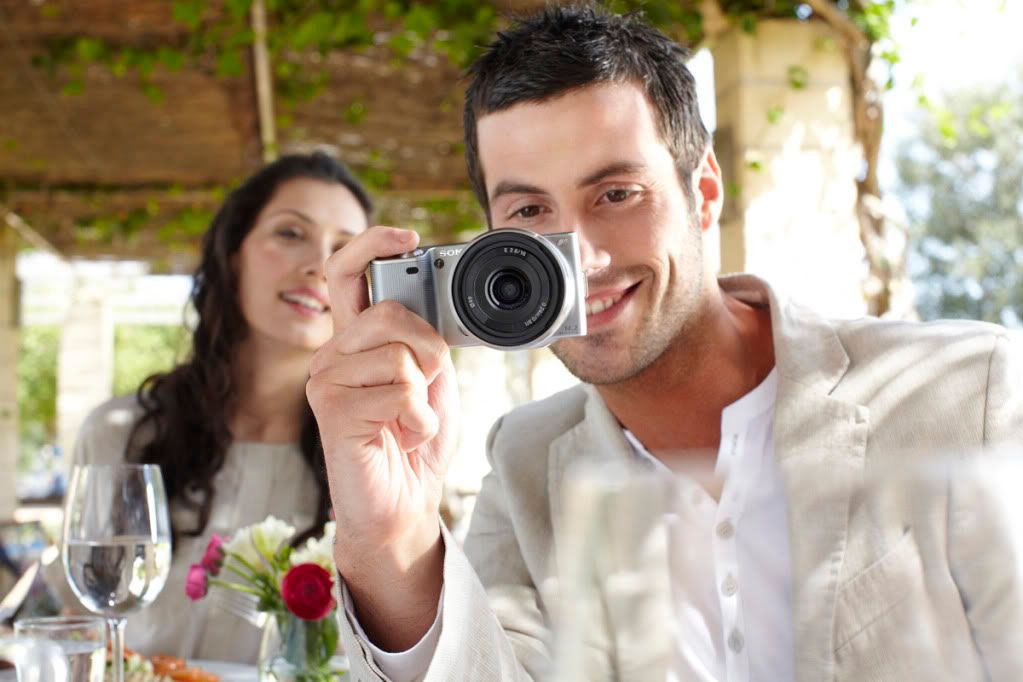
Known affectionately by their informal acronym, Electronic Viewfinder Interchangeable Lens (EVIL) cameras belong to a growing new class of cameras that sit between the slim (but functionally limited) compact cameras and bulky (and powerful) DSLRs.
Compact cameras are slim and great to have around for point-and-shoot photography, but they are very limited in terms of control and the lens cannot be interchanged. DSLR cameras are bulky and not something you want to lug around for casual photography, but they offer the ultimate speed and control, together with a host of interchangeable lenses to expand your horizon.
EVIL cameras incorporate the controls that photographers are used to having with their DSLRs (such as aperture and shutter), as well as the flexibility of having interchangeable lens. At the same time, the size of the EVIL cameras are much smaller than DSLRs because they do not have a reflex mirror. Instead, they incorporate an electronic viewfinder to allow users to view and compose their photos. Both in terms of size and functionality, they are smack in-between the compact cameras and pukka DSLRs.
The EVIL concept has just taken root recently, but there’re already of host of models in the category. The Panasonic GF series, Olympus E-P series and Samsung NX series are some of the cameras in the fray. Most of these cameras belong to the micro four-thirds sensor category, with the exception of Samsung’s NX10 which is using APS-sized sensor as well.
The drawbacks of the EVIL cameras include slower focusing than DSLRs, because they use contrast focusing instead of the faster phase detection focusing of DSLRs. In dark and low contrast situation, the focusing can be abysmal. In addition, the range of lenses dedicated for the EVIL system can be pretty limiting because these camera systems are still in their infancy.
For traditional SLR users, the concept of using a viewfinder to compose the photos is sacrilegious. Gone are the crystal clear view of a optical viewfinder afforded by the prism and reflex mirror, replaced by dark, dingy and pixilated LCD screens. The latest LCD screens on EVIL cameras deliver excellent resolution and results, but in bright sunlight the glare can make LCDs difficult to view. But to look on the bright side, EVIL users do not need to contend with dealing with vibrations from mirror flip.
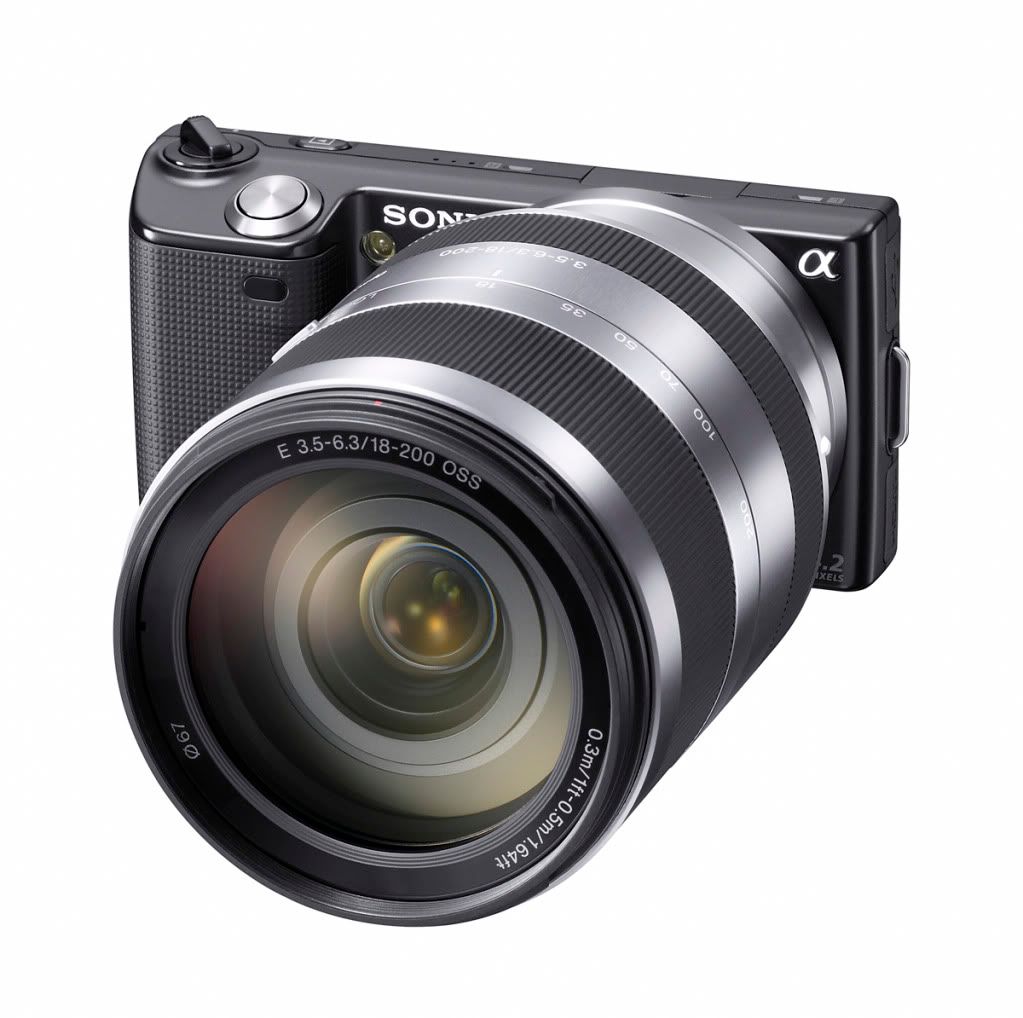
Sony has just hopped onto the EVIL bandwagon with their new Alpha (α) NEX-3 and NEX-5 mirrorless interchangeable lens cameras. And unlike most of their evil cousins (sorry… couldn’t resist the pun) the α NEX cameras incorporate a large14 mega pixel APS HD CMOS sensor APS size sensor, promising to deliver DSLR quality with ultra-compact dimensions.
Both the new Sony NEX-3 and NEX-5 share many common features, including high-speed burst of full-resolution images at up to 7fps, and a high-performance 3” tilt LCD. The Sony NEX-cameras include a cool Sweep Panorama function that allows users to just press the shutter button and swing the camera side-to-side or up and down, and a high-speed burst of frames is stitched together automatically to create 23 megapixel panoramas with a 226 degree effective angle of view. Sounds cool even though I wonder how often I’d use this function.

I have stated time and again that a camera is only as good as the lenses it can use, and the Sony NEX system is definitely keen to avoid being stranded without a good lens system. The cameras are using a new E-mount lens system (groan), BUT they are compatible with α DSLR lenses with optional Mount Adaptor.
There are 3 E-mount lenses at the time of the launch of the new Sony NEX system. Most users will purchase the 18-55mm f/3.5-5.6 zoom with image stabilizer, which comes in kit form with the cameras. For the most compact form factor, the 16mm f/2.8 pancake delivers a 24mm equivalent view, while being extremely small and offering a relatively bright f/2.8 max aperture. For those who want it all, the 18-200mm F3.5-6.3 superzoom with image-stabilizer is an excellent choice, even though it is so much larger than the camera!
My thoughts on the Sony Alpha NEX system
A compact form interchangeable lens camera with a large sensor sounds like a great idea, and Sony will definitely want to make a dent in the universe with their new foray into the EVIL territory (since it’s having a hard time against Nikon and Canon in the DSLR arena). The system sounds promising, but it is difficult to determine its potential without checking out its actual performance.
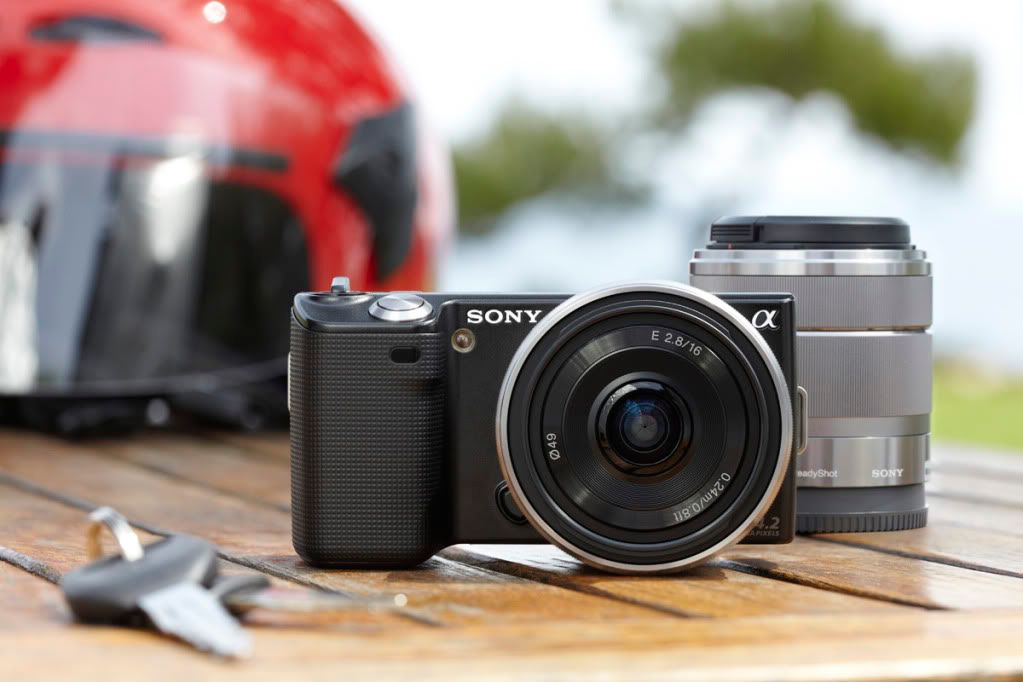
There’re several things that can potentially go wrong. Focusing speed of EVIL cameras has always lagged behind DSLRs, and sensor noise-control hasn’t exactly been the strength of Sony. I am not too enamored about the looks of the NEX system, given that the design looks lopsided (more lens than camera I’d say), and the styling of the grip looks like it came straight out of 1985. The handling is suspect, especially at longer focal length where users do not have the stability of pressing their cameras against their face as in the case of a DSLR.
However, if you’ve always been looking for a small form camera with a large sensor size and interchangeable lens, you can only choose between the Samsung NX10 and Sony NEX-system. Oh… if you’re feeling rich and do not need a interchangeable lens, do not forget the Leica X1 with its Leica 28mm f/2.8 lens!


Wednesday, April 28, 2010
High fibre diet for polar bear
Labels:
tripod,
wildlife
0
comments
A camera-shy polar bear had enough when a group of photographers persisted in taking his photos and out-stayed their welcome. The bear charged towards the group which scattered into the safety of their vehicles, leaving their tripods unguarded on the ice. The polar bear then grabbed a tripod and made off with it, which greatly amused the photographers because he happened to pick the most expensive tripod - a flagship carbon fibre model from Gitzo.

Either the bear had good taste or he was told to go on a high fibre diet. Read the full report here.

Credit Image: © National News/ZUMApress.com
Either the bear had good taste or he was told to go on a high fibre diet. Read the full report here.
Tuesday, April 27, 2010
Pimp your camera!
Labels:
announcement
0
comments

Think your camera is not bling enough? Can't bring yourself to glue some Swarovski crystals onto your camera? There's an easy way to pimp your camera and give it some personality! Check out the Gariz (not Garish fortunately) metallic plates for your camera! I think the stick-on for the compact cameras do look quite classy, although some people would probably think you stole the camera from P. Diddy himself.

The stickers for the DSLRs look quite daft though. But don't stop at your compacts - Garish, sorry I mean Gariz has stickers for mobile phones as well (yes, including the iconic iPhone). Just don't show Steve Jobs what you did to his precious...
Check out the Gariz website for yourself!
New Nikon 200-400mm f/4 launching soon
Labels:
announcement,
lens,
Nikon
0
comments
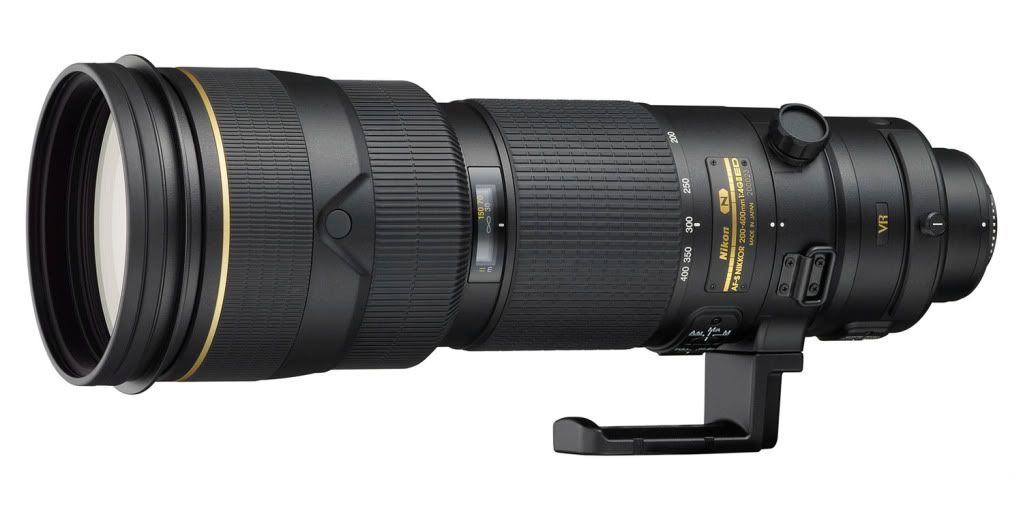
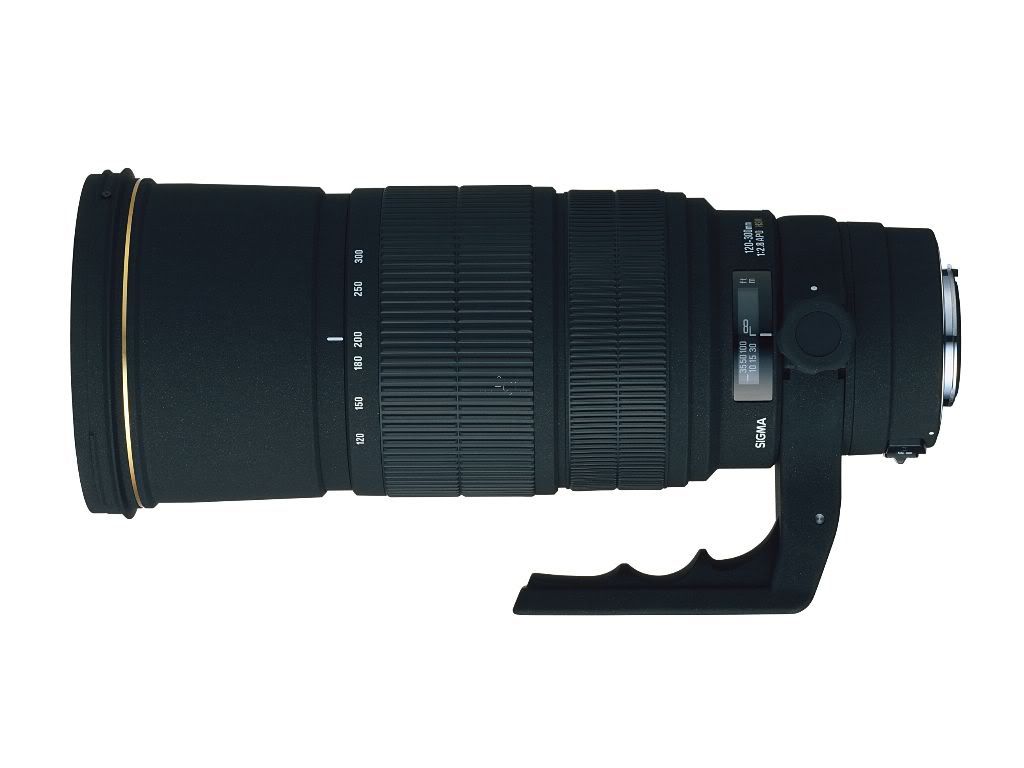
Nikon is set to launch a tweaked version of its 200-400mm f/4 VR by end of May. Featuring the same optical configuration and Silent Wave Focusing as its predecessor, the new AF-S Nikkor 200-400mm f/4G ED VR II looks to deliver the same optical performance and speed. However, Nikon improved its stabilization ability by incorporating four-stop VR II image stabilization, and the new lens will benefit greatly with Nikon's Nano Crystal Coat lens coating for reduced ghosting and flare.
It will come at a price though. The AF-S Nikkor 200-400mm f/4G ED VR II is expected to cost nearly US$7000, which squarely prices the lens out of reach for most but the most hardcore (and well-heeled) photographers. Who would buy such an expensive and huge lens? Nature photographers and sports photographers will certainly appreciate having the option to zoom at the super-telephoto range, as well as a relatively bright aperture of f/4 and enjoy the superlative performance of this ED lens as well (it has 24 lens elements in 17 groups with 4 ED elements!).
Friday, April 23, 2010
Hong Kong and Vietnam gallery added!
Labels:
gallery,
Photos
0
comments
Hi folks,
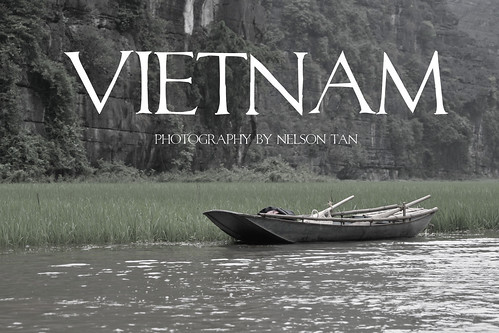
It's been a busy time for me, but hey... photography remains an important part of my life! These photos of Vietnam and Hong Kong were taken quite some time ago, but I've not shared them in the public domain as a collection yet...

The contrast between Hong Kong and Vietnam can't get any further... the slickness of the former British colony stands out against the war-ravaged past of the former French colony. The fast paced lifestyle of Hong Kong pits one another into working faster and harder than the person next to you, so you can really feel the buzz in every street of Hong Kong.

The charms of Vietnam appear immediately as you leave the airport, with quaint French styled houses lining the roads. Because each house is taxed according to the land area occupied, houses in Vietnam are built on narrow strips of real estate, and total floor area is maximized by building more levels. The Vietnamese are toiling hard to rebuild the economy after decades of war, and results are starting to show in the cities. But the charm of Vietnam remains in many parts of the country, and it is difficult to imagine such a beautiful country and wonderful people being embroiled in such a long era of conflict.
Visit my new photo galleries of Vietnam and Hong Kong at www.nelsontan.com (click on the Gallery section). Leave some comments here on how you like the photos as well!
It's been a busy time for me, but hey... photography remains an important part of my life! These photos of Vietnam and Hong Kong were taken quite some time ago, but I've not shared them in the public domain as a collection yet...

The contrast between Hong Kong and Vietnam can't get any further... the slickness of the former British colony stands out against the war-ravaged past of the former French colony. The fast paced lifestyle of Hong Kong pits one another into working faster and harder than the person next to you, so you can really feel the buzz in every street of Hong Kong.
The charms of Vietnam appear immediately as you leave the airport, with quaint French styled houses lining the roads. Because each house is taxed according to the land area occupied, houses in Vietnam are built on narrow strips of real estate, and total floor area is maximized by building more levels. The Vietnamese are toiling hard to rebuild the economy after decades of war, and results are starting to show in the cities. But the charm of Vietnam remains in many parts of the country, and it is difficult to imagine such a beautiful country and wonderful people being embroiled in such a long era of conflict.
Visit my new photo galleries of Vietnam and Hong Kong at www.nelsontan.com (click on the Gallery section). Leave some comments here on how you like the photos as well!
Monday, April 19, 2010
A day in the life of New York City
Labels:
DSLR,
tilt-shift,
video,
Vimeo
0
comments
Check out this amazing video of New York City by Sam O'Hare. Sam did the entire project shooting on a Nikon D3, and that's all you need to know for now. So please watch the video before you continue reading!
Done viewing the video?
How did you think Sam shot the sequence? Most people would imagine that Sam fitted tilt-shift lens to the Nikon D3 and set it to record video, and then speeding up the video clips in post-production to achieve the effect in the video. But that would not be special, would it?
Sam O'Hare actually used a Nikon D3 for this project, shooting 35,000 NEFs at 4 frames per second! He then painstakingly combined them in post production and output the files as 1080p video set to music. If that wasn't crazy enough, he wasn't shooting with a tilt-shift lens. Sam actually shot with a Tamron 17-50mm f/2.8 and Sigma 50-150mm f/2.8 lenses for all of the shots. The tilt-shift effect was all done in post frame by frame!
This is madness!
Madness? This is NEW YORK!
Done viewing the video?
How did you think Sam shot the sequence? Most people would imagine that Sam fitted tilt-shift lens to the Nikon D3 and set it to record video, and then speeding up the video clips in post-production to achieve the effect in the video. But that would not be special, would it?
Sam O'Hare actually used a Nikon D3 for this project, shooting 35,000 NEFs at 4 frames per second! He then painstakingly combined them in post production and output the files as 1080p video set to music. If that wasn't crazy enough, he wasn't shooting with a tilt-shift lens. Sam actually shot with a Tamron 17-50mm f/2.8 and Sigma 50-150mm f/2.8 lenses for all of the shots. The tilt-shift effect was all done in post frame by frame!
This is madness!
Madness? This is NEW YORK!
Wednesday, April 14, 2010
Photoshop CS5 - so what's new?
Labels:
Adobe,
announcement,
Photoshop,
software
0
comments
Photoshop CS4 was not all that hot, and Adobe knows it as well. Many photographers have criticized the software giant of churning out new versions of Photoshop too quickly and increasing the prices, without significant improvements in the versions. Worse still, Adobe received the short end of the stick by refusing to integrate RAW support for newer cameras such as the Canon EOS 5D Mk II for Photoshop CS3, in an apparent move to "convince" customers to upgrade. As far as we know, sales of Photoshop CS4 was not as spectacular as Adobe wanted it to be.
Now Adobe is back with Photoshop CS5. Has the company wizened up to the consumer's requests and are they listening to feedback? Well, it's difficult to say for sure without running through the software, but based on the list of new features, the new Photoshop CS5 certainly looks very interesting for those of us on the previous versions of Photoshop. Rob Galbraith has a nice summary of the new features in CS5, so be sure to check it out!
Subscribe to:
Posts (Atom)