Showing posts with label Canon. Show all posts
Monday, August 22, 2011
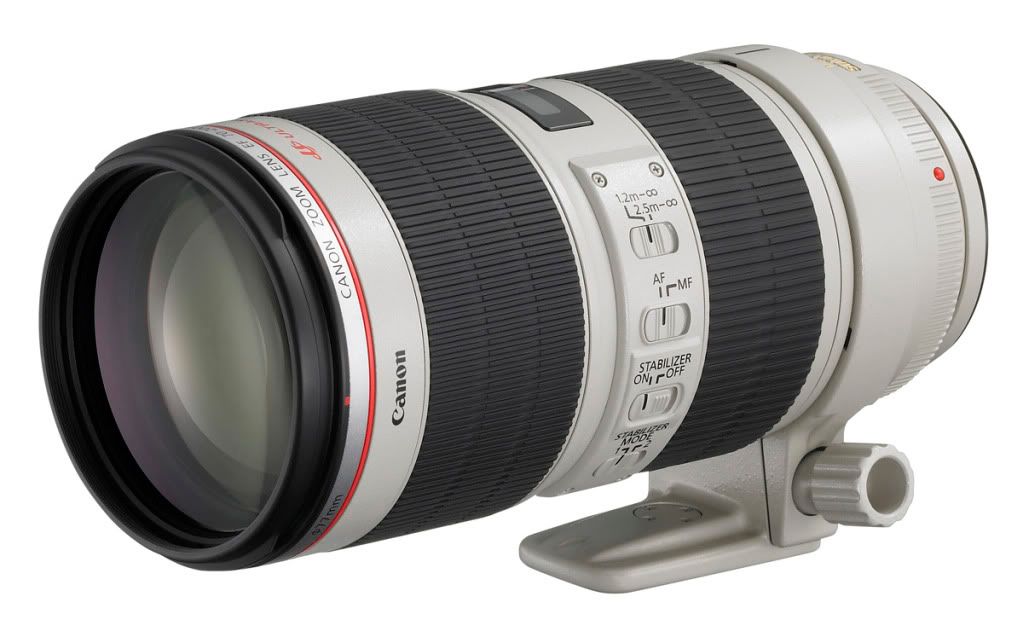
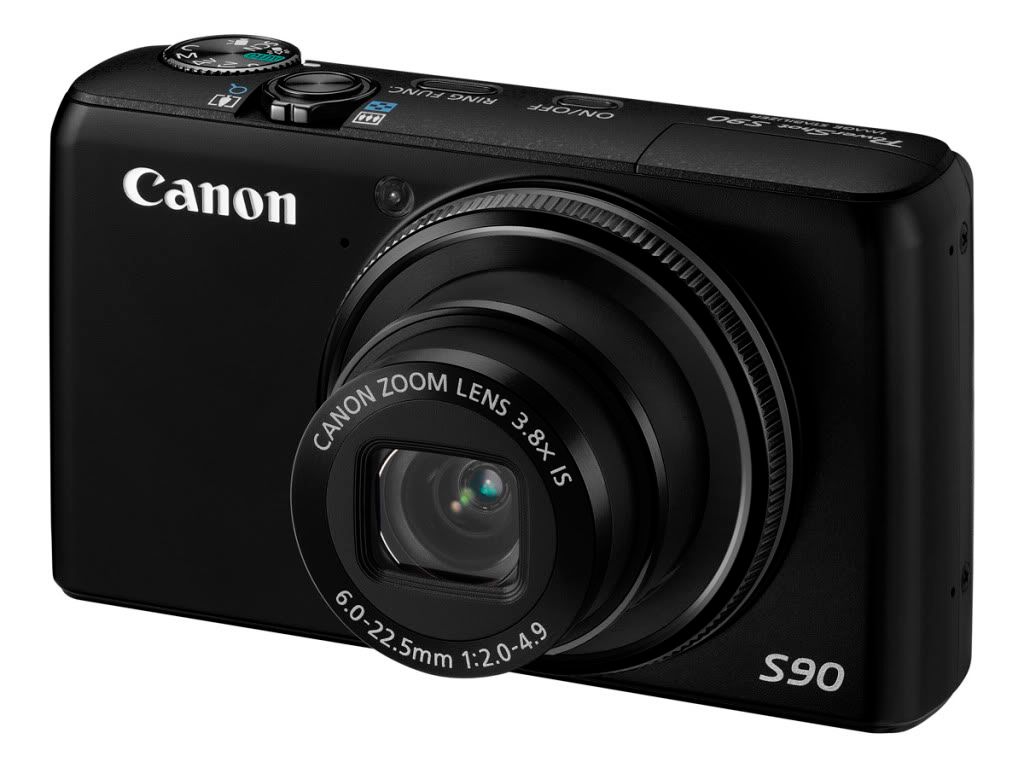
Canon EF 8-15mm f/4L Fisheye USM review
Labels:
Canon,
fisheye,
lens,
review
0
comments
The Canon EF 8-15mm f/4L Fisheye USM is an interesting proposition on paper, being the world’s first fisheye zoom lens offering both circular and full frame images. But does it actually deliver the kind of performance that one expects from the superlative L-lens series?
Check out my review of this outrageously wide lens here!
Monday, February 7, 2011
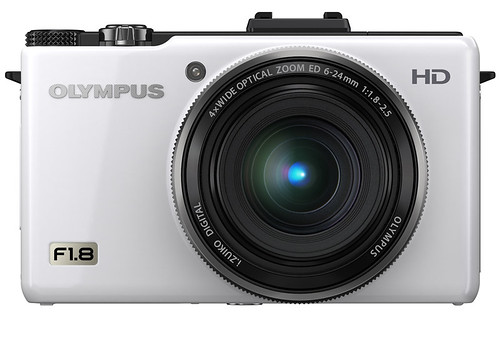
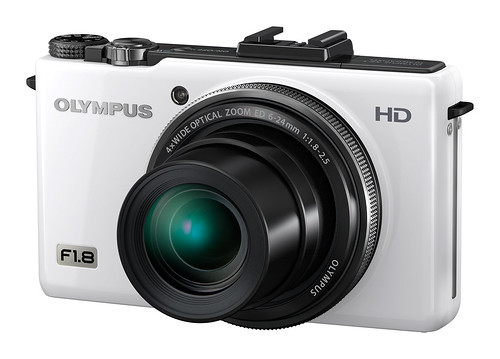
Olympus XZ-1 review
The new Olympus XZ-1 features the brightest lens of any digital compact cameras. Is it truly the answer to photographers’ dream of a high performance compact? Read on to discover the real-life performance of the Olympus XZ-1!
A new hope
In January 2011, Olympus announced a new digital compact camera that threw the photography community into a little frenzy. The Olympus XZ-1 redefined a new era by incorporating an ultra-bright lens into a digital compact camera chassis and sensor. Up to now, photographers have been depending on their trusty compacts such as the Canon S95 and Panasonic LX-5, which have ruled the roost on top-end compact cameras with their bright lenses and slightly larger (compared to typical compacts). The new Olympus XZ-1 smashed the record with a 6-24mm f/1.8-2.5, which delivered ultra large maximum aperture of f/1.8 to f/2.5 with a 35mm equivalent of 28-112mm focal length!
The new Olympus seems promising on paper specs, giving photographers fast performance even with a compact camera. Olympus claims in its press release that the XZ-1 is “developed for the photographer or enthusiast who is looking for the ultimate high-quality, high-performance premium compact camera”, and that the camera is designed for fast speed and low-light performance. That sounds like a lot of promises they have to deliver on!
Specifications
Let’s start with the paper specifications. The Olympus XZ-1 has a relatively modest 10 MP sensor, which is in line with the trend of most high-end compacts today in reining in the megapixel race for better control of sensor noise. The Olympus is slightly larger than the Panasonic LX-5 and significantly more so than the Canon S95, which are its main competitors. However, it remains “pocketable” and is still much more manageable compared to the huge Canon G12 and Nikon P7000.
The most outstanding feature must be the iZuiko 6-24mm f/1.8-2.5 lens that the Olympus XZ-1 is endowed with. With a equivalent of 28-112mm focal length, the lens promises unmatched maximum aperture of f/1.8 at the wide end, and a stellar f/2.5 at the tele-end of the lens. Never before has such an impressive lens been found on a compact, which really worked the photographic community into a frenzy.
Shutter speed runs from 60 seconds to 1/2000th second, which is very good for a compact camera. The ISO range is very respectable from ISO 100 to 6400, easily the widest on any digital compact camera. The camera even comes with a built-in ND filter to help you harness the power of the bright max aperture in bright conditions.
Design and handling
For a digital compact camera, the Olympus XZ-1 handles with aplomb. It manages to fit in the pocket even with the huge lens, and the controls fall easily to hand. The body has a nice matte finish to it, but it feels a bit too smooth to offer a good grip. As compensation there is a nice patch of rubber at the back of the camera for the right thumb to grip though.
Olympus has chosen not to include a charger with the camera, so you get a USB cable that you can connect to the camera to a power adapter for charging. This makes it impossible to charge a spare battery if you’re using the camera, although you can purchase an optional battery charger.
On the upside, you can connect the camera to your computer and download the images and charge the camera at the same time, albeit at a slower charging pace. I do have some concerns whether the flap covering the USB port on the camera will be worn out over time.
The Olympus XZ-1 uses a smallish LI-50B battery with 925mAh capacity, rated for 320 shots per charge. I managed 666 images (actually 333 simultaneous recording of both RAW+L) from one charge, which is pretty close to what Olympus claims.
The camera comes with a push-on lens cap, which must be secured by the lens string to avoid accidental loss. I’d very much prefer an integrated lens cap like other compacts, or at least a spring-loaded snap-on lens cap at least. In practical use however, the lens cap on the thread is not as fiddly as I imagined, and turning on the camera pops the lens cap out automatically, which is quite convenient! There is no filter screw thread on the lens though, so the use of screw-on filters is out of the question.
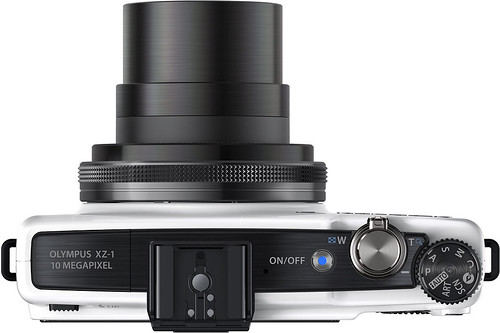
There is a tiny spring-loaded built-in flash that pops up with considerable force, and while it’s small in power (guide number of 7) it is pretty capable in illuminating nearby subjects with advanced flash controls, including fill-flash in fractions. The flash can even work with dedicated flash units for wireless flash triggering! There is a hot shoe on the camera, which you can mount external flash units for more power or to bounce the light.
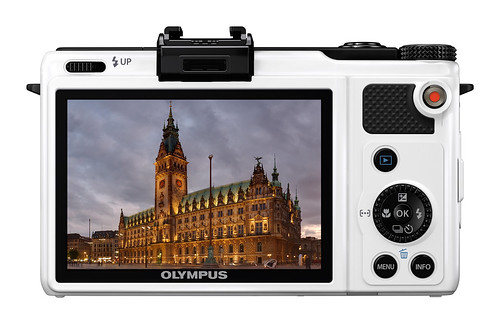
The Olympus XZ-1 features a dedicated video button that falls nicely under the right thumb, so you can instantly switch from shooting stills to 720p HD video at 30 fps at the touch of a button. This feature is very convenient and useful, but unfortunately not programmable for people who don’t shoot video.
And finally, Olympus stuck a F1.8 sticker on the front of the camera. I understand that this is a major selling point of the XZ-1, but it is totally unnecessary to call attention to it with a huge “look at me!” sticker. Potential customers already know of this fact, and it sticks out like a sore thumb for photographers trying to be discreet with the all-black version.
Operation
With the Olympus XZ-1, the navigation menu is easy. There is virtually no need to look at the instruction manual for most of the operation, except for more complex actions such as setting wireless flash etc. Press the power button and the camera powers up and extends the lens almost instantaneously.
Zooming of the lens is done with the ring around the shutter release button, and the control is nice and smooth for precise zooming. The mode dial is located just beside the shutter release button, which turns confidently with nice clicks (but it does rotates by accident sometimes). The modes are painted onto the dial, which makes me wonder if the paint will rub off over time (it will be a real issue if it does!).
The ring around the lens is nicely made, and the positive click stops makes it a pleasure to change the setting such as the aperture etc. I use my cameras in aperture priority mode most of the time, and the LCD displays the selected aperture in a scale format that is easy to use alongside with the lens ring selector.
In terms of focusing, the Olympus XZ-1 features the standard auto-focus, face detection, focus tracking, macro, super macro and manual focus. While the various focus modes work well, I disliked the fact that changing the focus mode is a two-step process (while many cameras do it in one step). In addition, I would love it if the camera can focus closer without me having to go into the close-up mode, which is a hassle due to the design.
One glaring design flaw of the Olympus XZ-1 is not having direct buttons for changing the ISO and Auto WB. Given that this camera is designed for serious photographers, not having ISO button is a serious drawback. We probably do not want the camera to set the ISO automatically, so we would need to change the ISO frequently to keep ISO to the lowest speed. It would be great if we can reprogram any of the buttons to let us change the ISO directly! The Auto WB works surprisingly well, but a lot of users would still love to have a WB button.
The 3” OLED monitor (610k resolution) with wide-viewing angle is bright and visible even in harsh sunlight, but can be difficult to use for certain operations such as manual focusing. You can however fit an optional Olympus VF-2 finder for easy viewing in all lighting condition, as well as achieving better critical focus.
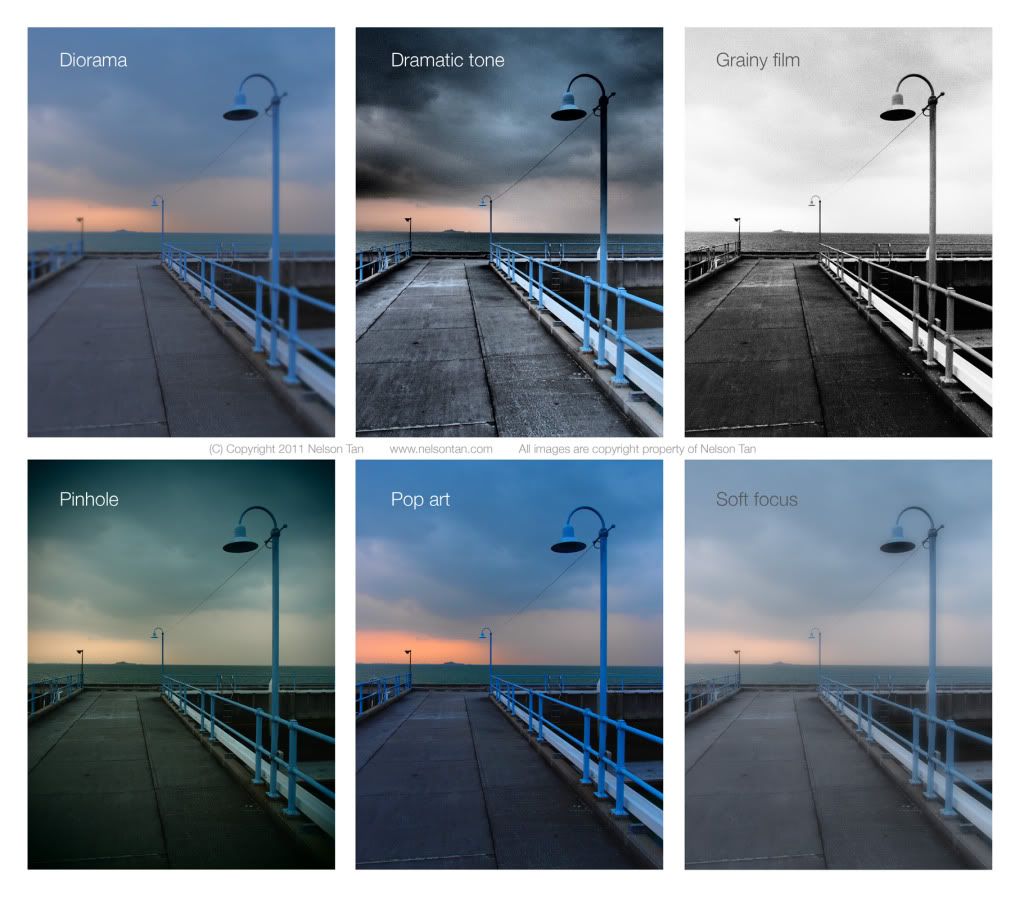
The Olympus XZ-1 comes with six Art Filters for photographic effects: Pop Art, Soft Focus, Grainy Film, Pin Hole, Diorama and Dramatic Tone. For serious photographers, these are nothing more than fancy modes that messes up the image. However, they can be quite fun to jazz up your image, and I like the fact that you can enable the effects in the RAW converter in the post-production stage if you are shooting in RAW mode.
Is the camera responsive enough?
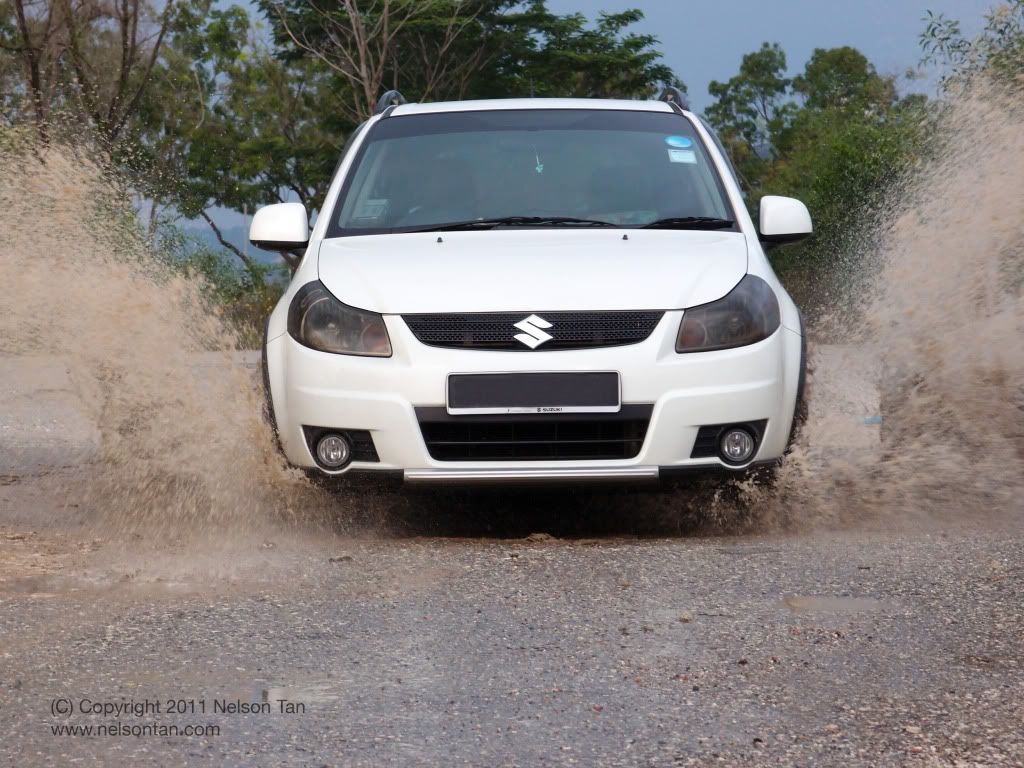
The image below was taken with the Olympus XZ-1 to demonstrate the short shutter lag. That was one of my concerns when purchasing the camera, and I had a short time with it at the store counter before deciding that it is pretty good in terms of shutter lag. However, this is assuming that you don't encounter difficulty in autofocusing, which will definitely have negative repercussions in capturing the image.
So far, the Olympus takes slightly longer to focus in lower light, but it is still mighty quick for a compact. In good light, it's really fast in focusing and the short shutter lag means that you never really miss most subject.
Just to clarify, this shot was taken to test the shutter lag only, not the autofocus tracking! I preset the focus point to the puddle of water and held the focus there by holding down the shutter release button at half-way position, and shot it as soon as the car's front tires hit the puddle. I was at the 112mm end of the lens to keep myself furthest away from the car in case I got hit!
Results
The Olympus XZ-1 is quite a joy to use, with fast shooting speed and short shutter lag. The focusing is pretty quick and snappy for a compact camera, and the zoom controls are smooth and precise. In low light conditions, focusing slows down but hunting is not prevalent with this camera.
The iZuiko lens has a strong tendency to flare though, bleeding magenta cast in the overblown areas. Such situations do not occur frequently, but when they do it is difficult to shield the lens totally from flare.
The video performance is pretty impressive though with very smooth stabilization. Autofocus works in video mode, but don’t expect the focus to be fast enough to capture fast moving subjects or quick change in subject distances.
Image quality is a mixed bag. The Olympus XZ-1 performs exceptionally well in certain conditions, but absolutely falters in others. In terms of JPEG quality, the Olympus TruePic V image processor does a nasty job of smearing details with heavy-handed noise reduction for any images shot above ISO 400. Forget about shooting above ISO 800 unless you are a huge fan of watercolour rendition of your images, or simply love Kodak TMAX 3200’s grain or noise.
In good lighting and at low ISO settings however, the Olympus XZ-1 is an absolute peach with its iZuiko lens. The images are extremely crisp and sharp, showing off the impressive lens to perfection. The advantages of large aperture can be used to their maximum advantage, delivering relatively shallow depth of field that one does not typically associate with a digital compact camera. In good light, the camera tones down its ham-fisted noise reduction algorithm, and you can see the impressive resolution of the lens in fine details.
Strangely, the Olympus XZ-1 struggles with distant subjects. Regardless of lighting condition or ISO settings, finer details in distant subjects are smeared in general. It is not as if the camera is incapable of good resolution, as the macro photography can capture even minute details with impressive performance. The combination of aggressive noise reduction and high amount of sharpening (presumably to bring back details lost in the noise reduction) can introduce a very “digital” feel to some of the images (not in the good sense!).
Depending on the image it is possible to tone down the smearing of details and noise reduction. Let me say that a lot of these issues become magnified in pixel peeping, and you probably will not see the effects when viewing the full image.
Strangely, the camera give hints of when the image is going to turn out slightly fuzzy with the noise reduction, even at ISO 100. When the light level falls, you can see some tiny "buzzing" rendition on the LCD screen when composing the image, which lets me know that noise-reduction is kicking in. It's weird, but so far it holds true for me - the images that I reviewed on the computer in post processing did look softer for the images with the "buzzing previews".
You can shoot in RAW mode to by-pass the aggressive noise reduction, but the problem of noise rears its ugly head once you turn off the processing. The bright Zuiko lens can’t help conceal the fact that the sensor is ultimately restricted by its small size compared to M4/3 sensors. The Olympus RAW software converter works pretty well and quickly, even though initially I was plagued with very slow responses when I was multi-tasking on my Macbook Pro.
Is the quality really that bad? No it isn't!
The Olympus XZ-1 is not known for being the sharpest digital compact in town, and we have seen many instances where the image has smudgy details to compensate for the sensor noise.
Worse case scenario (or even average performance) aside, what is the best that the Olympus XZ-1 can deliver when it comes to landscape details? Well... surprisingly acceptable if you are willing to coax out the image with the right settings. Here's an image I took of some branches and foliage, which is something that will trip most cameras over.
I shot the image at ISO 100 in RAW mode, in Aperture priority at f/5.6 and 1/60th sec. The RAW file was converted in the Olympus software with a +0.5 EV compensation to brighten up the details. Noise reduction was set to zero, and I dialed in +1 for sharpness in the Olympus software.
The resulting image is not something that will get the larger sensor cameras worried, but it shows that the Olympus XZ-1 can deliver reasonably good imagery with proper care and technique. Not quite the mushy leaves and branches I was dreading... phew!
Not too shoddy for a compact! You can get good images with a bit of care and understanding of how the camera operates.
High ISO samples
Everyone is curious about how the Olympus XZ-1 performs at high ISO ratings, given Olympus marketing team’s enthusiastic pitch of the camera as a low-light camera. Well… I wouldn’t exactly call it a “low light camera” even though it carries a bright lens, because the aggressive noise reduction and noisy sensor really limits how much you can shoot in dim conditions.
I don’t think it is as terrible as I imagined it, and it really is quite acceptable for a compact camera with a small sensor. It’s certainly no match for the APS-C or M4/3 sensors, but you certainly can capture images that few (if any) compact cameras can, thanks to the brilliant Zuiko lens mounted on the Olympus XZ-1!
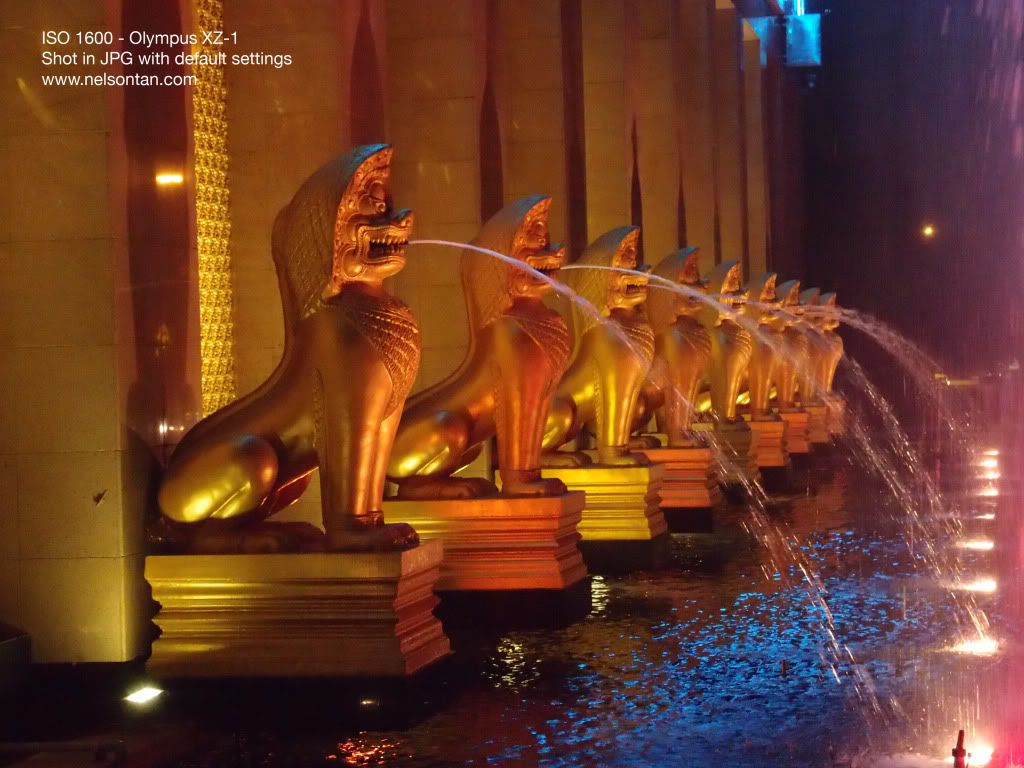
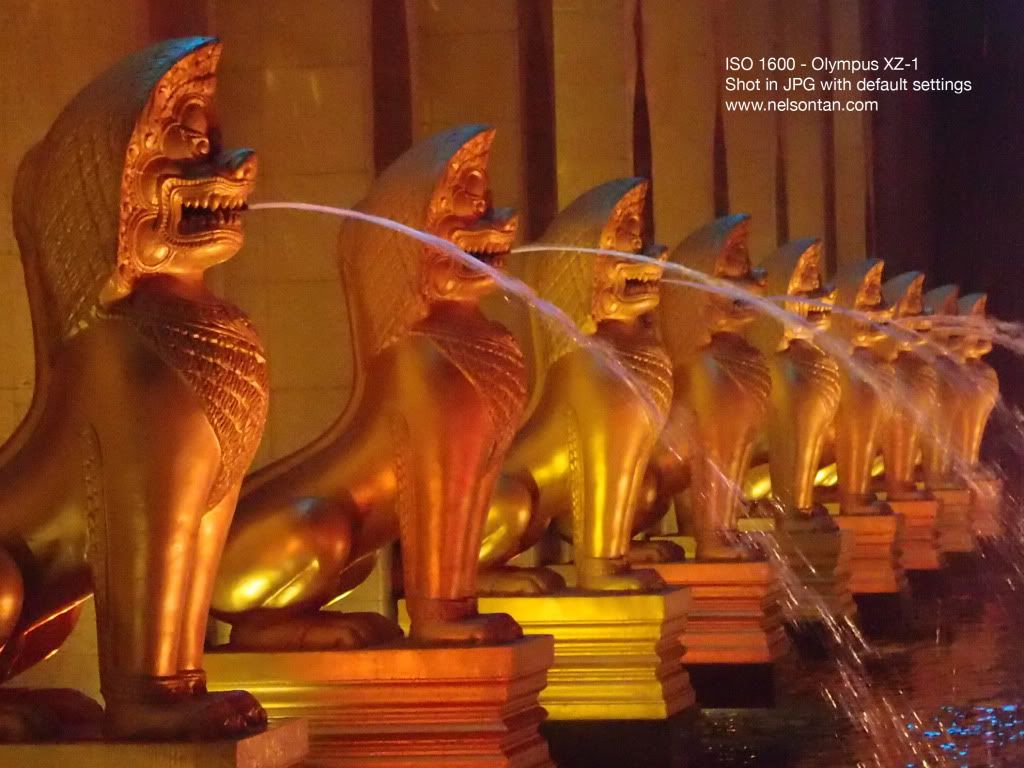
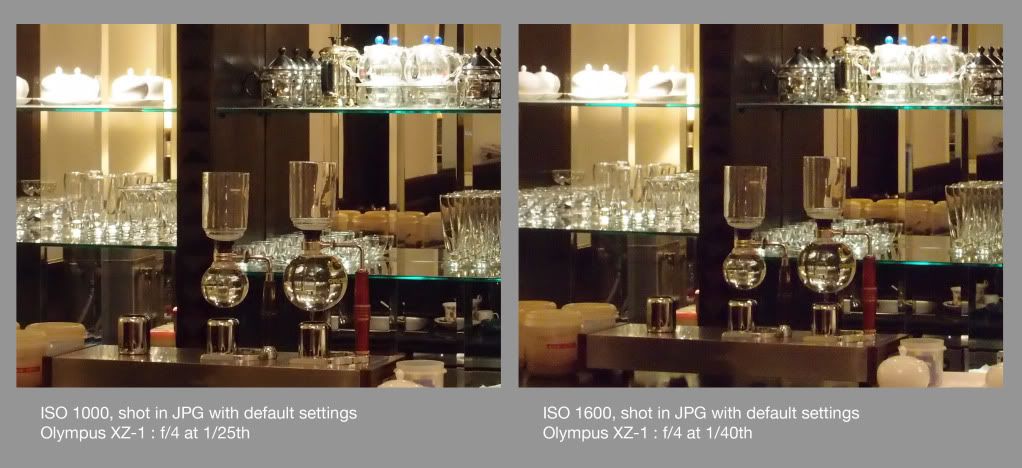
I took some images in JPG mode with default noise reduction and sharpening for you to judge the quality for yourself.
Conclusion
As Darth Vader will say, “The Force is with you, young Skywalker. But you’re not a Jedi yet!” In this case, I’d say that the Olympus XZ-1 carries an impressive lens, but the size and capabilities of the sensor means that it carries no threat to the bigger boys such as the Micro Four-Thirds or DSLR.
If you are looking for pure quality in a compact, you’d be better served by something with a larger sensor in a compact chassis such as the Leica X1, Fuji X100 or the Panasonic GF-2/Olympus E-P2 with pancake lens. I know they cost much more than the XZ-1, but you will be sorely disappointed if quality is your main criteria.
Perhaps the dream of a digital camera with great quality and bright lens in a compact chassis was too ambitious for current technology, which led me to be disappointed with the Olympus XZ-1’s image quality. The camera has it nailed in virtually all aspects, but the sensor is simply a let down for me. I’m sure many photographers will enjoy using the Olympus XZ-1, but I personally find it ironic that a camera that is designed to thrive in low-light with its bright lens delivers its worst images in such conditions (no fault of the lens – it’s the terrible noise reduction processing).
Great image quality in a truly compact camera? Yes, the Olympus XZ-1 is a happy camper given sufficient light, and you will be amply rewarded with sharp images with great colours. But when the light level dips and the camera is given a free rein with its over-the-top noise reduction, everything just falls apart like a house of cards. It is not a camera for everyone, and should be used with care to get the most out of its noisy sensor and high-performance lens, and definitely not for low-light photography.
The compactness lets me carry the camera everywhere, and get images where I used to miss because I did not have a camera with me. I'd say that the Olympus XZ-1 is an excellent camera in spite of its limitations, or when you compare it with other offerings in the same league (such as the S95 or LX5). It's not an easy camera to handle if you expect quality images straight out, but given time to learn its quirks, I think most users will grow to love it more.
Anyway, this is a compact camera so I get to carry it everywhere, and having noisy images is better than having no images. My review was never meant to compare the XZ-1 to a larger sensor camera, but rather to provide some actual images from the camera to curb high expectations stemming from the enthusiastic marketing from Olympus pitching the XZ-1 as a low-light camera.
If you happen to own the Olympus XZ-1, bring it everywhere whenever you leave your larger cameras at home. Cheers!
Keep yourself in the loop...
If you want to be updated on my latest reviews and photography articles, click on the following link to join my blog's Facebook page!
"Photography Happenings" Facebook page
A new hope
In January 2011, Olympus announced a new digital compact camera that threw the photography community into a little frenzy. The Olympus XZ-1 redefined a new era by incorporating an ultra-bright lens into a digital compact camera chassis and sensor. Up to now, photographers have been depending on their trusty compacts such as the Canon S95 and Panasonic LX-5, which have ruled the roost on top-end compact cameras with their bright lenses and slightly larger (compared to typical compacts). The new Olympus XZ-1 smashed the record with a 6-24mm f/1.8-2.5, which delivered ultra large maximum aperture of f/1.8 to f/2.5 with a 35mm equivalent of 28-112mm focal length!
The new Olympus seems promising on paper specs, giving photographers fast performance even with a compact camera. Olympus claims in its press release that the XZ-1 is “developed for the photographer or enthusiast who is looking for the ultimate high-quality, high-performance premium compact camera”, and that the camera is designed for fast speed and low-light performance. That sounds like a lot of promises they have to deliver on!
Specifications
Let’s start with the paper specifications. The Olympus XZ-1 has a relatively modest 10 MP sensor, which is in line with the trend of most high-end compacts today in reining in the megapixel race for better control of sensor noise. The Olympus is slightly larger than the Panasonic LX-5 and significantly more so than the Canon S95, which are its main competitors. However, it remains “pocketable” and is still much more manageable compared to the huge Canon G12 and Nikon P7000.
The most outstanding feature must be the iZuiko 6-24mm f/1.8-2.5 lens that the Olympus XZ-1 is endowed with. With a equivalent of 28-112mm focal length, the lens promises unmatched maximum aperture of f/1.8 at the wide end, and a stellar f/2.5 at the tele-end of the lens. Never before has such an impressive lens been found on a compact, which really worked the photographic community into a frenzy.
Shutter speed runs from 60 seconds to 1/2000th second, which is very good for a compact camera. The ISO range is very respectable from ISO 100 to 6400, easily the widest on any digital compact camera. The camera even comes with a built-in ND filter to help you harness the power of the bright max aperture in bright conditions.
Design and handling
For a digital compact camera, the Olympus XZ-1 handles with aplomb. It manages to fit in the pocket even with the huge lens, and the controls fall easily to hand. The body has a nice matte finish to it, but it feels a bit too smooth to offer a good grip. As compensation there is a nice patch of rubber at the back of the camera for the right thumb to grip though.
Olympus has chosen not to include a charger with the camera, so you get a USB cable that you can connect to the camera to a power adapter for charging. This makes it impossible to charge a spare battery if you’re using the camera, although you can purchase an optional battery charger.
On the upside, you can connect the camera to your computer and download the images and charge the camera at the same time, albeit at a slower charging pace. I do have some concerns whether the flap covering the USB port on the camera will be worn out over time.
The Olympus XZ-1 uses a smallish LI-50B battery with 925mAh capacity, rated for 320 shots per charge. I managed 666 images (actually 333 simultaneous recording of both RAW+L) from one charge, which is pretty close to what Olympus claims.
The camera comes with a push-on lens cap, which must be secured by the lens string to avoid accidental loss. I’d very much prefer an integrated lens cap like other compacts, or at least a spring-loaded snap-on lens cap at least. In practical use however, the lens cap on the thread is not as fiddly as I imagined, and turning on the camera pops the lens cap out automatically, which is quite convenient! There is no filter screw thread on the lens though, so the use of screw-on filters is out of the question.
There is a tiny spring-loaded built-in flash that pops up with considerable force, and while it’s small in power (guide number of 7) it is pretty capable in illuminating nearby subjects with advanced flash controls, including fill-flash in fractions. The flash can even work with dedicated flash units for wireless flash triggering! There is a hot shoe on the camera, which you can mount external flash units for more power or to bounce the light.
The Olympus XZ-1 features a dedicated video button that falls nicely under the right thumb, so you can instantly switch from shooting stills to 720p HD video at 30 fps at the touch of a button. This feature is very convenient and useful, but unfortunately not programmable for people who don’t shoot video.
And finally, Olympus stuck a F1.8 sticker on the front of the camera. I understand that this is a major selling point of the XZ-1, but it is totally unnecessary to call attention to it with a huge “look at me!” sticker. Potential customers already know of this fact, and it sticks out like a sore thumb for photographers trying to be discreet with the all-black version.
Operation
With the Olympus XZ-1, the navigation menu is easy. There is virtually no need to look at the instruction manual for most of the operation, except for more complex actions such as setting wireless flash etc. Press the power button and the camera powers up and extends the lens almost instantaneously.
Amazing sharpness and control - when the light is good. Click on images to enlarge.
Zooming of the lens is done with the ring around the shutter release button, and the control is nice and smooth for precise zooming. The mode dial is located just beside the shutter release button, which turns confidently with nice clicks (but it does rotates by accident sometimes). The modes are painted onto the dial, which makes me wonder if the paint will rub off over time (it will be a real issue if it does!).
The ring around the lens is nicely made, and the positive click stops makes it a pleasure to change the setting such as the aperture etc. I use my cameras in aperture priority mode most of the time, and the LCD displays the selected aperture in a scale format that is easy to use alongside with the lens ring selector.
In terms of focusing, the Olympus XZ-1 features the standard auto-focus, face detection, focus tracking, macro, super macro and manual focus. While the various focus modes work well, I disliked the fact that changing the focus mode is a two-step process (while many cameras do it in one step). In addition, I would love it if the camera can focus closer without me having to go into the close-up mode, which is a hassle due to the design.
Macro mode makes the car look faster than it really is. How brilliant!
One glaring design flaw of the Olympus XZ-1 is not having direct buttons for changing the ISO and Auto WB. Given that this camera is designed for serious photographers, not having ISO button is a serious drawback. We probably do not want the camera to set the ISO automatically, so we would need to change the ISO frequently to keep ISO to the lowest speed. It would be great if we can reprogram any of the buttons to let us change the ISO directly! The Auto WB works surprisingly well, but a lot of users would still love to have a WB button.
The 3” OLED monitor (610k resolution) with wide-viewing angle is bright and visible even in harsh sunlight, but can be difficult to use for certain operations such as manual focusing. You can however fit an optional Olympus VF-2 finder for easy viewing in all lighting condition, as well as achieving better critical focus.
Impressive macro performance from the Olympus XZ-1. Click on images to enlarge.
The Olympus XZ-1 comes with six Art Filters for photographic effects: Pop Art, Soft Focus, Grainy Film, Pin Hole, Diorama and Dramatic Tone. For serious photographers, these are nothing more than fancy modes that messes up the image. However, they can be quite fun to jazz up your image, and I like the fact that you can enable the effects in the RAW converter in the post-production stage if you are shooting in RAW mode.
Cool effects available, but don't get too addicted! Click on image to enlarge.
The diorama mode works well in certain images! Click on image to enlarge.
But the award of "Coolest Effect" still goes to Dramatic Tone. Click on image to enlarge.
Is the camera responsive enough?
The image below was taken with the Olympus XZ-1 to demonstrate the short shutter lag. That was one of my concerns when purchasing the camera, and I had a short time with it at the store counter before deciding that it is pretty good in terms of shutter lag. However, this is assuming that you don't encounter difficulty in autofocusing, which will definitely have negative repercussions in capturing the image.
So far, the Olympus takes slightly longer to focus in lower light, but it is still mighty quick for a compact. In good light, it's really fast in focusing and the short shutter lag means that you never really miss most subject.
Just to clarify, this shot was taken to test the shutter lag only, not the autofocus tracking! I preset the focus point to the puddle of water and held the focus there by holding down the shutter release button at half-way position, and shot it as soon as the car's front tires hit the puddle. I was at the 112mm end of the lens to keep myself furthest away from the car in case I got hit!
Short shutter lag means you can get shots like this! Click on image to enlarge.
Results
The Olympus XZ-1 is quite a joy to use, with fast shooting speed and short shutter lag. The focusing is pretty quick and snappy for a compact camera, and the zoom controls are smooth and precise. In low light conditions, focusing slows down but hunting is not prevalent with this camera.
The iZuiko lens has a strong tendency to flare though, bleeding magenta cast in the overblown areas. Such situations do not occur frequently, but when they do it is difficult to shield the lens totally from flare.
The video performance is pretty impressive though with very smooth stabilization. Autofocus works in video mode, but don’t expect the focus to be fast enough to capture fast moving subjects or quick change in subject distances.
Image quality is a mixed bag. The Olympus XZ-1 performs exceptionally well in certain conditions, but absolutely falters in others. In terms of JPEG quality, the Olympus TruePic V image processor does a nasty job of smearing details with heavy-handed noise reduction for any images shot above ISO 400. Forget about shooting above ISO 800 unless you are a huge fan of watercolour rendition of your images, or simply love Kodak TMAX 3200’s grain or noise.
Wide open shots deliver relatively shallow depth of field. Click on image to enlarge.
Generally impressive performance from Zuiko lens. Click on image to enlarge.
In good lighting and at low ISO settings however, the Olympus XZ-1 is an absolute peach with its iZuiko lens. The images are extremely crisp and sharp, showing off the impressive lens to perfection. The advantages of large aperture can be used to their maximum advantage, delivering relatively shallow depth of field that one does not typically associate with a digital compact camera. In good light, the camera tones down its ham-fisted noise reduction algorithm, and you can see the impressive resolution of the lens in fine details.
Strangely, the Olympus XZ-1 struggles with distant subjects. Regardless of lighting condition or ISO settings, finer details in distant subjects are smeared in general. It is not as if the camera is incapable of good resolution, as the macro photography can capture even minute details with impressive performance. The combination of aggressive noise reduction and high amount of sharpening (presumably to bring back details lost in the noise reduction) can introduce a very “digital” feel to some of the images (not in the good sense!).
Distant details suffer from aggressive noise reduction even at ISO 100.
Click to enlarge cropped section.
Depending on the image it is possible to tone down the smearing of details and noise reduction. Let me say that a lot of these issues become magnified in pixel peeping, and you probably will not see the effects when viewing the full image.
Strangely, the camera give hints of when the image is going to turn out slightly fuzzy with the noise reduction, even at ISO 100. When the light level falls, you can see some tiny "buzzing" rendition on the LCD screen when composing the image, which lets me know that noise-reduction is kicking in. It's weird, but so far it holds true for me - the images that I reviewed on the computer in post processing did look softer for the images with the "buzzing previews".
You can shoot in RAW mode to by-pass the aggressive noise reduction, but the problem of noise rears its ugly head once you turn off the processing. The bright Zuiko lens can’t help conceal the fact that the sensor is ultimately restricted by its small size compared to M4/3 sensors. The Olympus RAW software converter works pretty well and quickly, even though initially I was plagued with very slow responses when I was multi-tasking on my Macbook Pro.
Is the quality really that bad? No it isn't!
The Olympus XZ-1 is not known for being the sharpest digital compact in town, and we have seen many instances where the image has smudgy details to compensate for the sensor noise.
Worse case scenario (or even average performance) aside, what is the best that the Olympus XZ-1 can deliver when it comes to landscape details? Well... surprisingly acceptable if you are willing to coax out the image with the right settings. Here's an image I took of some branches and foliage, which is something that will trip most cameras over.
I shot the image at ISO 100 in RAW mode, in Aperture priority at f/5.6 and 1/60th sec. The RAW file was converted in the Olympus software with a +0.5 EV compensation to brighten up the details. Noise reduction was set to zero, and I dialed in +1 for sharpness in the Olympus software.
The resulting image is not something that will get the larger sensor cameras worried, but it shows that the Olympus XZ-1 can deliver reasonably good imagery with proper care and technique. Not quite the mushy leaves and branches I was dreading... phew!
Here’s the full image… Click on image to enlarge.
And here's a 100% crop from the image… Click on image to enlarge.
Not too shoddy for a compact! You can get good images with a bit of care and understanding of how the camera operates.
High ISO samples
Everyone is curious about how the Olympus XZ-1 performs at high ISO ratings, given Olympus marketing team’s enthusiastic pitch of the camera as a low-light camera. Well… I wouldn’t exactly call it a “low light camera” even though it carries a bright lens, because the aggressive noise reduction and noisy sensor really limits how much you can shoot in dim conditions.
I don’t think it is as terrible as I imagined it, and it really is quite acceptable for a compact camera with a small sensor. It’s certainly no match for the APS-C or M4/3 sensors, but you certainly can capture images that few (if any) compact cameras can, thanks to the brilliant Zuiko lens mounted on the Olympus XZ-1!
I took some images in JPG mode with default noise reduction and sharpening for you to judge the quality for yourself.
Enlarged section of image shot at ISO 1600. Click on image to enlarge.
ISO 1000 and 1600 compared. Click on image to enlarge.
ISO 100, 400, 800 and 1600 compared. Click on image to enlarge.
Conclusion
As Darth Vader will say, “The Force is with you, young Skywalker. But you’re not a Jedi yet!” In this case, I’d say that the Olympus XZ-1 carries an impressive lens, but the size and capabilities of the sensor means that it carries no threat to the bigger boys such as the Micro Four-Thirds or DSLR.
If you are looking for pure quality in a compact, you’d be better served by something with a larger sensor in a compact chassis such as the Leica X1, Fuji X100 or the Panasonic GF-2/Olympus E-P2 with pancake lens. I know they cost much more than the XZ-1, but you will be sorely disappointed if quality is your main criteria.
The Olympus hates the Dark Side. Slight blurring occurs as noise-reduction kicks in.
If you are comparing to the Panasonic LX-5 or Canon S95, the Olympus XZ-1 will be a good choice if lens specification is your key consideration. The Olympus delivers strong performance over the competitors in good light and moderate distance, but fails to shine in poorer light condition and closer to infinity. Both competitors offer credible lens performance and good max aperture as well as distinctive advantages, with the Canon S95 in a truly small chassis and the LX-5 delivering native 16:9 panoramic images. They are definitely no pushovers in this battle of digital compacts, and these three cameras cater to different crowds.Perhaps the dream of a digital camera with great quality and bright lens in a compact chassis was too ambitious for current technology, which led me to be disappointed with the Olympus XZ-1’s image quality. The camera has it nailed in virtually all aspects, but the sensor is simply a let down for me. I’m sure many photographers will enjoy using the Olympus XZ-1, but I personally find it ironic that a camera that is designed to thrive in low-light with its bright lens delivers its worst images in such conditions (no fault of the lens – it’s the terrible noise reduction processing).
If only the Olympus can deliver images like these constantly...
Great image quality in a truly compact camera? Yes, the Olympus XZ-1 is a happy camper given sufficient light, and you will be amply rewarded with sharp images with great colours. But when the light level dips and the camera is given a free rein with its over-the-top noise reduction, everything just falls apart like a house of cards. It is not a camera for everyone, and should be used with care to get the most out of its noisy sensor and high-performance lens, and definitely not for low-light photography.
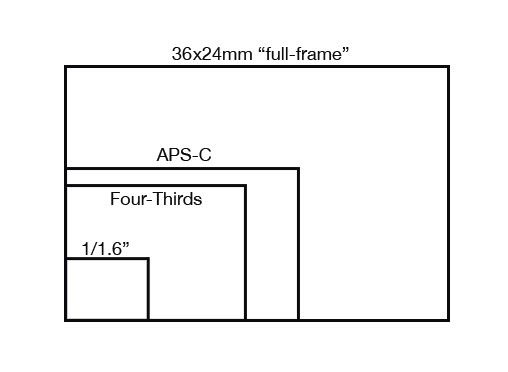
Let’s be realistic – the 1/1.6" sensor is too small for truly noise free photography
The compactness lets me carry the camera everywhere, and get images where I used to miss because I did not have a camera with me. I'd say that the Olympus XZ-1 is an excellent camera in spite of its limitations, or when you compare it with other offerings in the same league (such as the S95 or LX5). It's not an easy camera to handle if you expect quality images straight out, but given time to learn its quirks, I think most users will grow to love it more.
Anyway, this is a compact camera so I get to carry it everywhere, and having noisy images is better than having no images. My review was never meant to compare the XZ-1 to a larger sensor camera, but rather to provide some actual images from the camera to curb high expectations stemming from the enthusiastic marketing from Olympus pitching the XZ-1 as a low-light camera.
If you happen to own the Olympus XZ-1, bring it everywhere whenever you leave your larger cameras at home. Cheers!
Keep yourself in the loop...
If you want to be updated on my latest reviews and photography articles, click on the following link to join my blog's Facebook page!
"Photography Happenings" Facebook page
Friday, November 5, 2010
Create your own origami of Canon cameras
Labels:
Canon,
fun,
origami
0
comments
A couple of post ago, I highlighted this photographer creating his own film SLR camera from scratch, using nothing more than some raw materials and exceptional engineering prowess. For the rest of us who're mere mortals, it is probably easier for us to construct a camera from PAPER instead of cold hard steel.
That's right. PaperKraft.Net has posted PDFs of origami models of three notable Canon SLR cameras that you can print out using your desktop printer, and put together with nothing more than a pair of scissors, glue and plenty of time and patience!
You can download the artwork for the Canonflex, AE-1 and EOS 5D Mk II online at the following links:
Canonflex Part 1 (download)
Canonflex Part 2 (download)
Canon AE-1 Part 1 (download)
Canon AE-1 Part 2 (download)
Canon EOS 5D Mk II Part 1 (download)
Canon EOS 5D Mk II Part 2 (download)
That's right. PaperKraft.Net has posted PDFs of origami models of three notable Canon SLR cameras that you can print out using your desktop printer, and put together with nothing more than a pair of scissors, glue and plenty of time and patience!
Canonflex Part 1 (download)
Canonflex Part 2 (download)
Canon AE-1 Part 1 (download)
Canon AE-1 Part 2 (download)
Canon EOS 5D Mk II Part 1 (download)
Canon EOS 5D Mk II Part 2 (download)
Thursday, August 26, 2010
Canon launches EOS 60D and slew of lenses!
Labels:
announcement,
Canon
0
comments
Right after Nikon's announcement of a DSLR body and a slew of lenses, Canon found it fitting to announce the launch of products of the same magnitude! With the much-anticipated (and much-leaked) EOS 60D, Canon has a couple of interesting lenses in the line-up as well!
The new 18MP EOS 60D features a more compact body than its predecessor and uses SD cards, differentiating (and perhaps lowering its position within the family) from the EOS 7D. Interestingly, it scavenges parts from other bodies, utilizing the 3" LCD (107k) from the EOS 550D and the autofocus module from EOS 50D (perhaps not to usurp the "AF speed-king" position of 7D). It does however share the same video capability as the EOS 7D (very clever positioning of features).
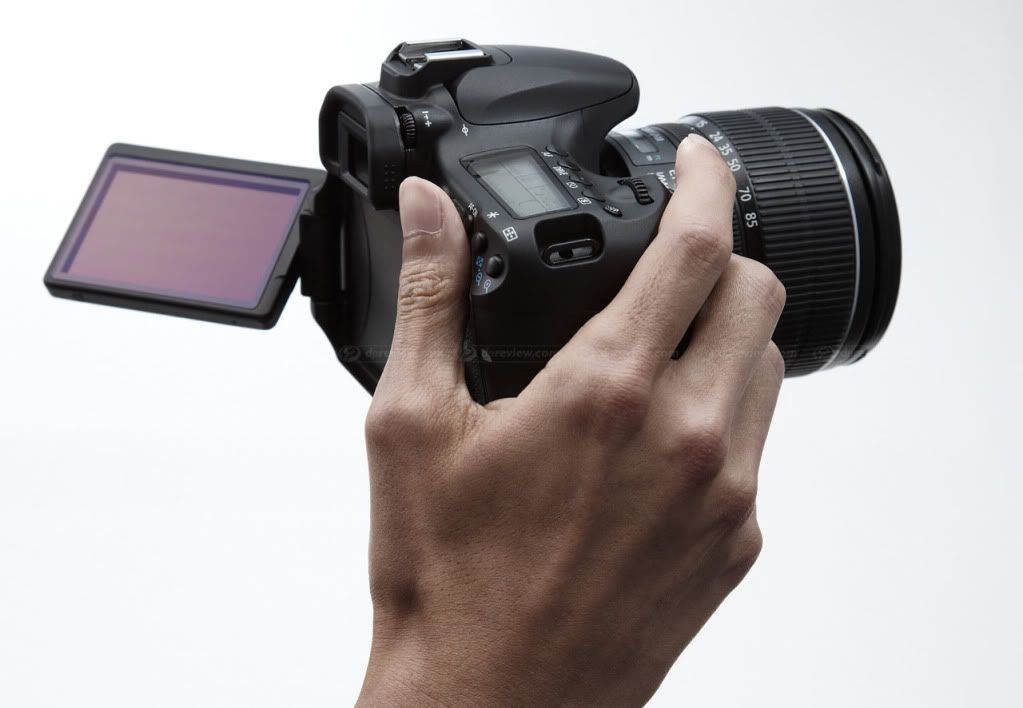
What really differentiates the new EOS 60D from its predecessor is the articulating (or pivoting) LCD, which allows users to compose from various angles not traditionally possible by looking through a viewfinder. It's the first time a Canon EOS feature a rotating LCD, which Nikon and Sony already have launched in their DSLRs. It will be interesting to see how this revolutionary (for EOS series) screen go down with Canon users. More importantly, the launch of the EOS 60D has shown a fundamental shift (along with the introduction of the EOS 7D) in product positioning against Nikon and Sony.
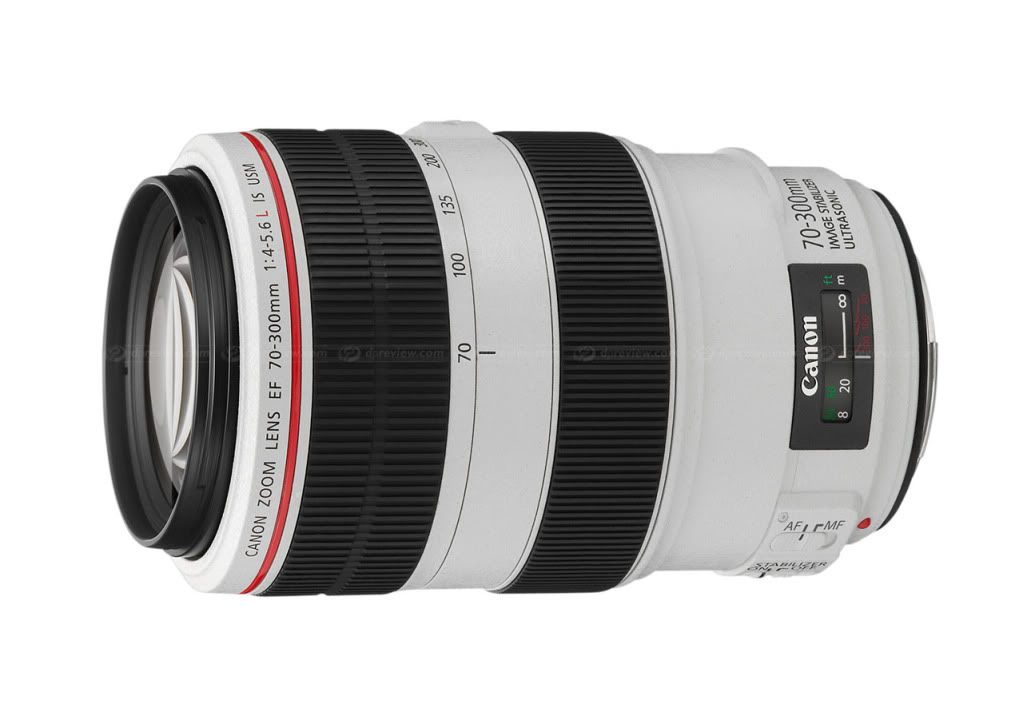
Canon L-series of lenses have always signified exceptional performance, although most people will readily relate the red ring to expensive pricing and fast aperture lenses. That's why it exceptionally surprising (or shocking) to see that Canon is releasing a EF 70-300mm f/4-5.6 L IS USM lens, which has a aperture range one would relate to a consumer lens. Canon states that it's positioned as an "affordable" L lens, but seriously this lens really seem out-of-place in the L-series line-up. I'm sure this lens can deliver uber-sharp performance, but I can't imagine the board-room discussions and internal controversy when they decided to label it as a L-lens. It sounds good with ring-type USM motor, weatherproof construction, and a 4-stop image stabilization, but one should always remember that the L-program is very much a marketing initiative as well as a technical classification. Labeling this lens as a L-series is a mistake in my opinion, but we shall leave it to history to judge if Canon is right.
Leaving disappointments behind, Canon launched an interesting lens in the form of a EF 8-15mm f/4 L USM, which is claimed as the "world's first fisheye zoom lens to offer both circular and full frame images". Turn it to the 8mm focal length, and you'll get the signature circular fish-eye effect on a full-frame sensor. Turn it towards the 15mm setting, and you're looking at more conventional rectilinear wide-angle images. It's a very interesting lens, even though I'm not sure how many people will actually need such a lens. Get ready for a slew of fish-eye images… argh!
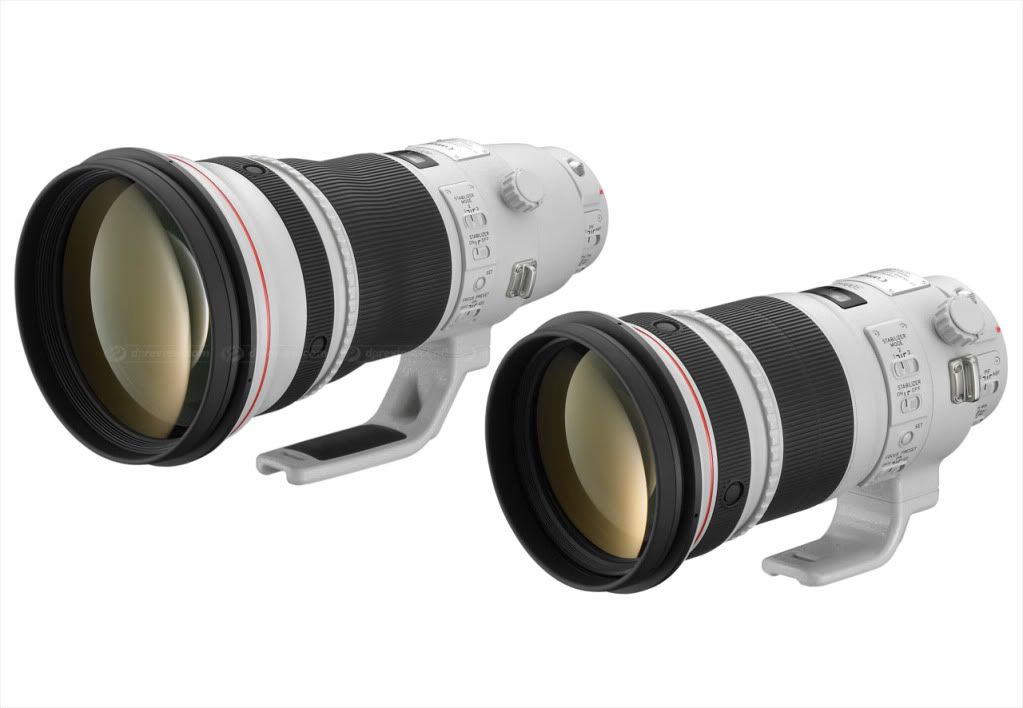
Canon has always excelled in super-telephoto lenses, and I'm sure sports and wild-life photographers will be excited to hear about the updated EF 300mm f/2.8 IS II and EF 400mm f/2.8 IS II USM lenses. More than superficial updates, the new lenses feature completely redesigned optics as well as the latest IS technology. The new EF 400mm lens is 28% lighter than its predecessor, thanks to the use of magnesium alloy construction.
The new 18MP EOS 60D features a more compact body than its predecessor and uses SD cards, differentiating (and perhaps lowering its position within the family) from the EOS 7D. Interestingly, it scavenges parts from other bodies, utilizing the 3" LCD (107k) from the EOS 550D and the autofocus module from EOS 50D (perhaps not to usurp the "AF speed-king" position of 7D). It does however share the same video capability as the EOS 7D (very clever positioning of features).
What really differentiates the new EOS 60D from its predecessor is the articulating (or pivoting) LCD, which allows users to compose from various angles not traditionally possible by looking through a viewfinder. It's the first time a Canon EOS feature a rotating LCD, which Nikon and Sony already have launched in their DSLRs. It will be interesting to see how this revolutionary (for EOS series) screen go down with Canon users. More importantly, the launch of the EOS 60D has shown a fundamental shift (along with the introduction of the EOS 7D) in product positioning against Nikon and Sony.
Canon L-series of lenses have always signified exceptional performance, although most people will readily relate the red ring to expensive pricing and fast aperture lenses. That's why it exceptionally surprising (or shocking) to see that Canon is releasing a EF 70-300mm f/4-5.6 L IS USM lens, which has a aperture range one would relate to a consumer lens. Canon states that it's positioned as an "affordable" L lens, but seriously this lens really seem out-of-place in the L-series line-up. I'm sure this lens can deliver uber-sharp performance, but I can't imagine the board-room discussions and internal controversy when they decided to label it as a L-lens. It sounds good with ring-type USM motor, weatherproof construction, and a 4-stop image stabilization, but one should always remember that the L-program is very much a marketing initiative as well as a technical classification. Labeling this lens as a L-series is a mistake in my opinion, but we shall leave it to history to judge if Canon is right.
Leaving disappointments behind, Canon launched an interesting lens in the form of a EF 8-15mm f/4 L USM, which is claimed as the "world's first fisheye zoom lens to offer both circular and full frame images". Turn it to the 8mm focal length, and you'll get the signature circular fish-eye effect on a full-frame sensor. Turn it towards the 15mm setting, and you're looking at more conventional rectilinear wide-angle images. It's a very interesting lens, even though I'm not sure how many people will actually need such a lens. Get ready for a slew of fish-eye images… argh!
Canon has always excelled in super-telephoto lenses, and I'm sure sports and wild-life photographers will be excited to hear about the updated EF 300mm f/2.8 IS II and EF 400mm f/2.8 IS II USM lenses. More than superficial updates, the new lenses feature completely redesigned optics as well as the latest IS technology. The new EF 400mm lens is 28% lighter than its predecessor, thanks to the use of magnesium alloy construction.
Wednesday, April 14, 2010
DSLR video used to film 'House' season finale
Labels:
Canon,
video
0
comments
The status of DSLR video quality has been elevated to the next level with the breaking news that the entire episode of the season finale of the primetime medical drama series “House” was filmed with a DSLR. In an interview, director of FOX broadcasting Greg Yaitanes said that they used the Canon EOS 5D Mk II with 24-70mm and 70-200mm lenses to film the season finale to achieve a “richer look”.
Greg loves the shallow depth of field of the EOS 5D Mk II, and felt that such a way of shooting is “the future”. The crew was shooting on 24p format and found the compactness of the DSLR ideal for filming in tight spaces. Most of the shots were done handheld or on a small format, instead of the traditional video stabilizers. Watch for it!
Thursday, April 1, 2010
This takes the cake!
Labels:
Canon,
fun
0
comments
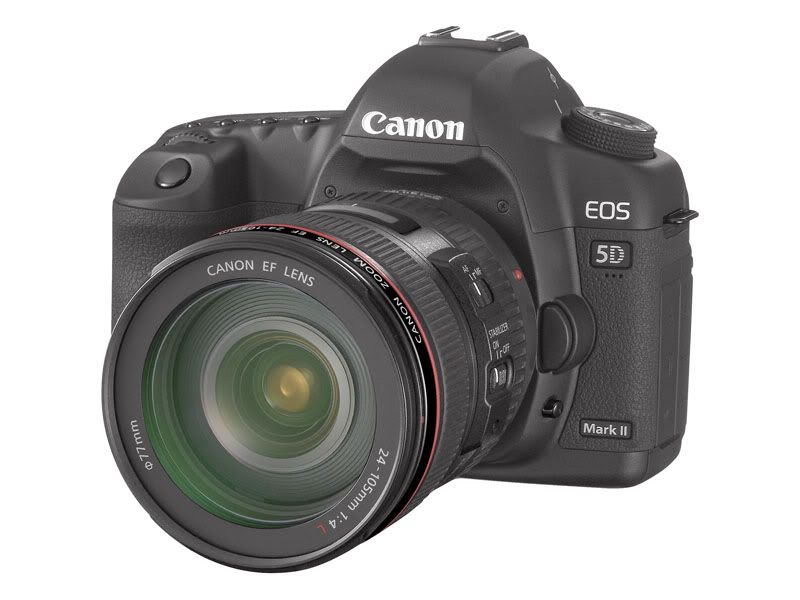
They say you can't have your cake and eat it... and I'm glad I can't! Check out this Canon EOS 5D Mk II cake designed by Studio Cake Design. Know you know what you can order for your loved ones for their next birthday!
What if you have a lot of guests at the party? Easy... order the Canon 5D Mk II with a vertical grip and a EF 1200mm f/5.6 L lens!
EOS 7D - when hell freezes over
Labels:
Canon,
DSLR,
waterproof
0
comments
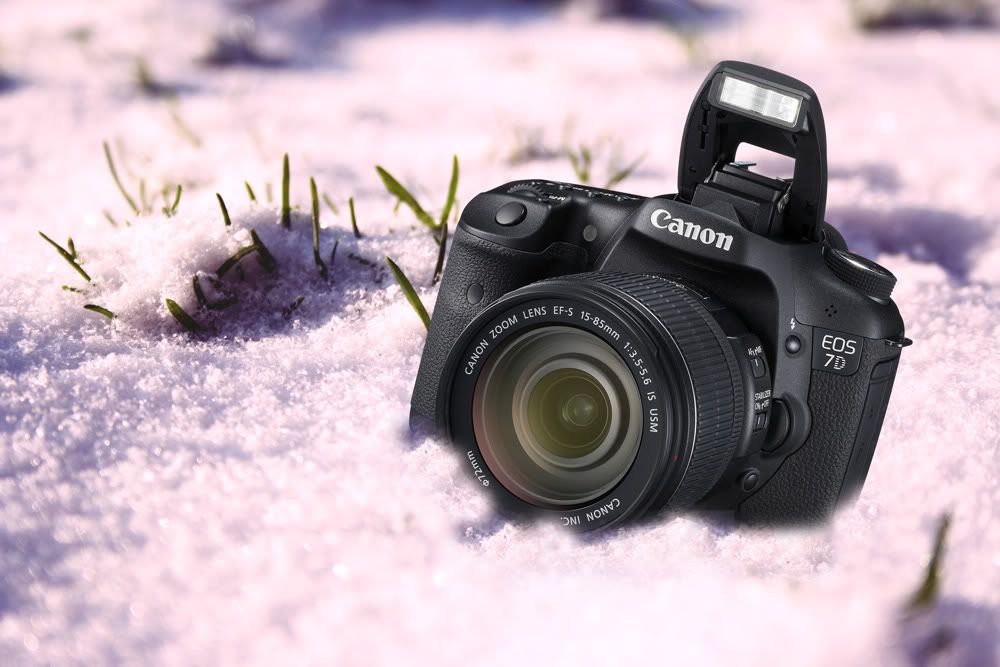
We often see photographers scurrying for cover at the slightest hint of rain or snow. Given the prices of cameras today, you can’t blame them for being too careful with their latest acquisitions. But just how tough are the modern digital cameras? According to photographer Ole Jørgen Liodden who took his Canon EOS 7D to Antarctica, he reckons they’re pretty tough! Read more about the extreme weather testing he puts the EOS 7D through at the following link…
http://canonfieldreviews.com/7d-1-weather-sealing/
Friday, February 26, 2010
Canon 35mm f/1.4 L USM lens - initial impressions
Labels:
Canon,
Editor's notes,
initial impressions,
lens
0
comments
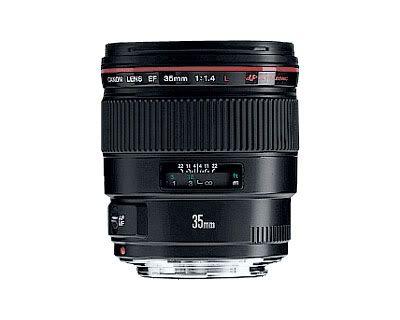
After many weeks of waiting, I finally managed to get my hands on the Canon EF 35mm f/1.4 L USM lens. The lens was out of stocks for quite a while, so I am hoping that the wait is worthwhile. The initial impressions seem quite favourable, with a nice solid construction and a decent weight. Mounted on the EOS 5D Mk II with vertical grip, the lens feels really right at home.
I took it out for a couple of test snaps, and the initial results were rather pleasing. No back focus issues detected so far, and the bokeh is really nice and creamy. I’m going to shoot more with it over the next two weeks, so you can expect a more thorough review soon.
But meanwhile, here are two images from my first ten minutes with the Canon 35mm f/1.4 L USM lens!
Image shot wide-open at f/1.4
I took it out for a couple of test snaps, and the initial results were rather pleasing. No back focus issues detected so far, and the bokeh is really nice and creamy. I’m going to shoot more with it over the next two weeks, so you can expect a more thorough review soon.
Oh wait... perhaps I can pit the 35mm f/1.4 L lens against another 35mm f/1.4 "L" lens? Canon vs Leica - Battle of the 35mm f/1.4 lenses! Let me know if you're interested to see something like that...
Image shot wide-open at f/1.4
Wednesday, February 10, 2010
Canon updates a winning formula - EOS 550D
Labels:
announcement,
Canon
0
comments
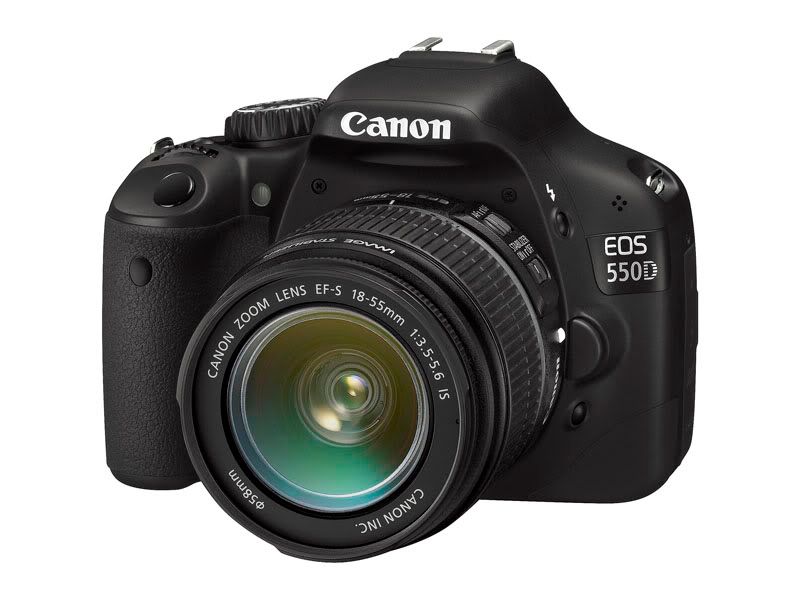
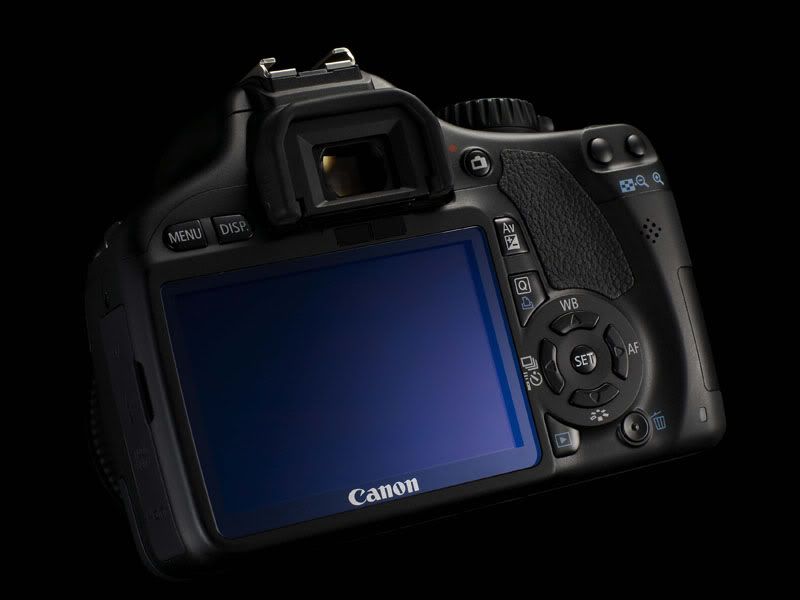
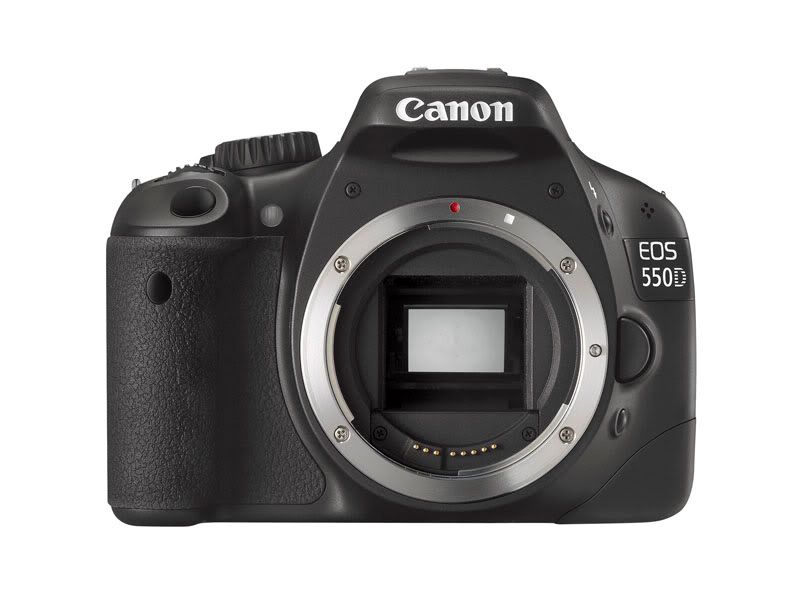
Canon has updated its popular EOS 500D camera with even more technologies, upping the bar on entry-level DSLRs. The new EOS 550D delivers 18MP of resolution (a moderate upgrade over the predecessor's 15MP) and a better 3" LCD at 1040k dot resolution (seriously the previous 920K was amazing enough though), as well as the inclusion of the 63-point iFCL metering system. Other minor improvements include 3.7 fps continuous shooting and +/-5 stops exposure compensation (seriously overkill).
One interesting and useful feature which is great for me is the ability to restrict the max ISO speed when setting to Auto ISO. Now, Auto ISO is a great tool when you're shooting in changing light levels, moving outdoors and indoors. But there might be a limit as to how much quality degeneration you're prepared to accept with increasing ISO. Having this feature is really neat, now that I can have the convenience of having the camera choose my ISO within a specified range. The new DIGIC processors and CMOS sensors might be great, but ISO 1600? No thanks!
In terms of video recording, the EOS 550D records video in full 1920x1080p HD resolution, with selectable frame rate (30/25/24fps) or 60/50 fps in 720p resolution. You can also plug in an external microphone when capturing video with its 3.5mm stereo microphone socket.
I think that Canon has done a reasonably good job in updating the EOS 500D, which is already a winner with its specs. Obviously Canon wants to win big in the consumer DSLR segment, and it's extending its lead by improving the key model even further, but not rocking the boat by overloading the features and spoiling the forthcoming EOS 60D's market.
Interestingly, Canon chose to announce the EOS 550D rather than an upgrade to the aging EOS 1000D. You can expect the EOS 1000D's replacement to sport similar features to the EOS 500D I guess! The EOS 500D's existing users will not be terribly handicapped by the EOS 550D's improvements, but if you have an older model such as a EOS 400D, the EOS 550D will represent a worthwhile upgrade.
One interesting and useful feature which is great for me is the ability to restrict the max ISO speed when setting to Auto ISO. Now, Auto ISO is a great tool when you're shooting in changing light levels, moving outdoors and indoors. But there might be a limit as to how much quality degeneration you're prepared to accept with increasing ISO. Having this feature is really neat, now that I can have the convenience of having the camera choose my ISO within a specified range. The new DIGIC processors and CMOS sensors might be great, but ISO 1600? No thanks!
In terms of video recording, the EOS 550D records video in full 1920x1080p HD resolution, with selectable frame rate (30/25/24fps) or 60/50 fps in 720p resolution. You can also plug in an external microphone when capturing video with its 3.5mm stereo microphone socket.
I think that Canon has done a reasonably good job in updating the EOS 500D, which is already a winner with its specs. Obviously Canon wants to win big in the consumer DSLR segment, and it's extending its lead by improving the key model even further, but not rocking the boat by overloading the features and spoiling the forthcoming EOS 60D's market.
Interestingly, Canon chose to announce the EOS 550D rather than an upgrade to the aging EOS 1000D. You can expect the EOS 1000D's replacement to sport similar features to the EOS 500D I guess! The EOS 500D's existing users will not be terribly handicapped by the EOS 550D's improvements, but if you have an older model such as a EOS 400D, the EOS 550D will represent a worthwhile upgrade.
Friday, January 29, 2010
Canon announces 50th Millionth EF lens
Labels:
announcement,
Canon
0
comments
Canon announces the production of its 50 millionth EF lens for its EOS range of cameras. It is indeed incredible news given that Canon had only announced the milestone of 40 millionth EF lens just two years ago in 2008!
“Today’s announcement shows an immense achievement in our ability to grow and adapt to reach this impressive target in such a short space of time,” said Kazuyuki Suzuki, General Manager,Lens Products Marketing Management Div. Canon inc. “We are proud to support so many photographers of all abilities through our extensive range of DSLRs, including the recently launched 7D designed to create a whole new photographic experience.”
Wednesday, January 6, 2010
Canon launches EF 70-200mm f/2.8 L IS USM Mk II
Labels:
announcement,
Canon,
lens
0
comments
Canon has announced the launch of the 2nd generation of the professional workhorse lens. The Canon EF 70-200mm f/2.8 L IS USM Mk II improves on the predecessor’s performance with a revised optical formula featuring a fluorite element and 5 UD elements. The minimum focusing distance has also been reduced to a class-leading 1.2m to allow for tighter close-ups, and the Image Stabilization (IS) has been improved to 4 stops (instead of the predecessor’s 3 stops). Other minor improvements include a wider focusing ring and dust/splash proof construction.
The inclusion of the fluorite element is an important aspect of the Canon EF 70-200mm f/2.8 L IS USM Mk II, as the IS version of the 70-200mm f/4 IS is noticeably sharper than the non-IS version by incorporating a fluorite element. We can only wait for test images to come in at this moment. Meanwhile, legions of fans may be disappointed to learn that the new lens is not lighter than its predecessor – at 1.49 kg. Ouch!
Monday, January 4, 2010
Canon PowerShot S90 review
Labels:
Canon,
review
2
comments
In the last quarter of 2009, Canon launched a new compact camera targeted at the serious photography enthusiast – the Canon Powershot S90. The sleek and compact camera was an ambitious project designed to capture market share away from the likes of Panasonic’s immensely successful LX-series.
While both Canon’s S90 and G11 are targeted at the same serious enthusiast segment, it is clear looking at the design and configuration that both 10MP cameras serve very different purposes. The Powershot G11’s bulky body houses a significantly larger and brighter lens, as well as a hotshoe for external flash control and a rotating LCD. The Canon Powershot S90 on the other hand seems to be focused on streamlining the best features of the high-end Powershot into a sleek body. So what gives? Let’s find out!
Subscribe to:
Posts (Atom)