Showing posts with label announcement. Show all posts
Friday, March 2, 2012
Kodak discontinues E6 slidefilm
Labels:
announcement,
film,
Kodak
0
comments
In yet another stunning announcement (after they killed off Kodachrome, declared bankruptcy and sold off their digital imaging division), Kodak has now announced that they are discontinuing all E6 slide film production. Kodak insisted that film production is still profitable, but the recent announcements seem to suggests otherwise. They will continue manufacturing Portra films, Ektar films and black-and-white films.
I'm gonna get as much of the remaining stocks while I can. And it will be a dark day when Ektar or Tri-X dies due to the boffins in charge of the once glorious Kodak.
Read more about it at this link.
Friday, February 24, 2012
Fuji X100 - now available in black
Labels:
announcement,
Fujifilm,
rangefinder
0
comments
Fuji is offering a limited (10,000 pcs actually) number of their X100 cameras in black, presumably making it more stealthy and professional looking. The only catch is the price of USD1700, which is significantly more than the usual silver X100. It does come with a leather cover, lens hood and protective filter though, but I'm not sure if the overall package is worth so much more than the USD1200 standard silver model. Still that's an option for those of us who have the extra dough in the pocket... I'm hanging out for the pink Hello Kitty version rumoured to be in the works.
Sunday, February 5, 2012
Labels:
announcement,
Leica,
lens,
rangefinder
0
comments
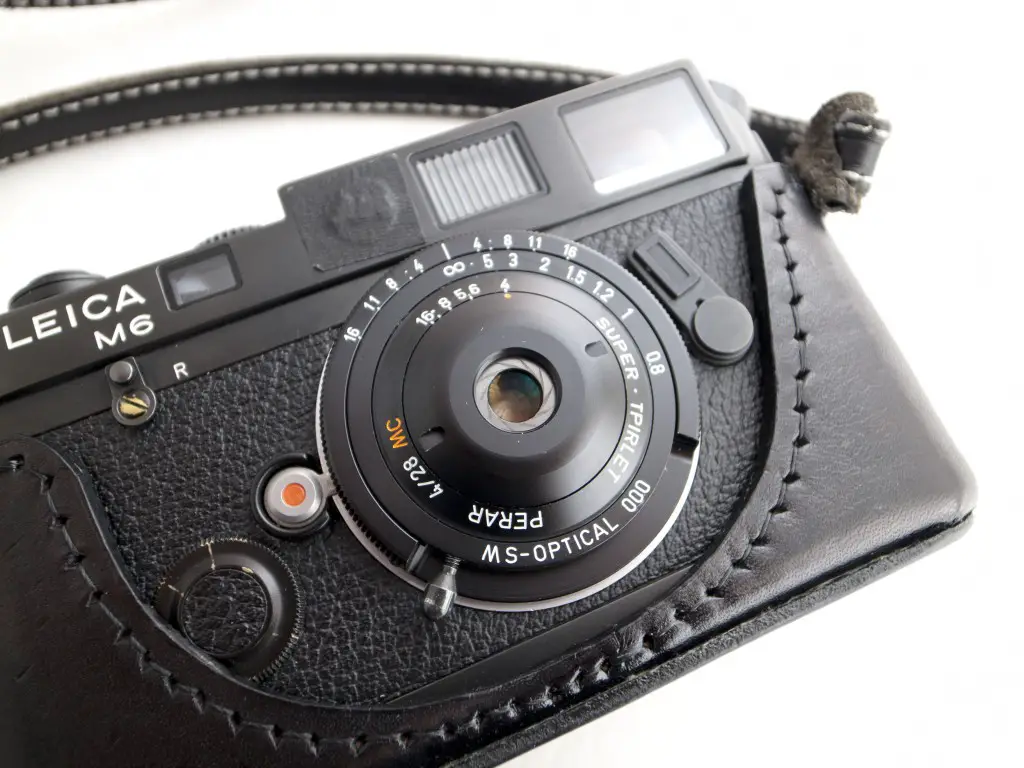
If you think that your rangefinder lenses are small, you ain't seen nothing yet! In Japan, a dedicated lens maker Mr. Miyazaki set-up his own company called MS-Optical to create astoundingly small lenses for rangefinders. He gained fame a few years back with his first product - the Perar 35mm lens, which really looks more like a body mount cap than a lens!
Now he has pushed the boundaries further with a new lens - the Perar 28mm f/4 lens, which is even smaller than his debut product! What's really amazing is that all his lenses are handmade by him in limited numbers, which explains their rarity and scarcity. They are popular for delivering good performance in an ultra-compact package.
You can order the lens from here.
Thursday, February 2, 2012
Labels:
announcement,
EVIL,
Pentax
0
comments
Pentax has launched a new mirrorless interchangeable lens camera - the Pentax K-01 (pronounced "kay-zero-one"). It utilizes contrast detection because of the absence of a mirror, which will probably be detrimental for its focusing speed. However, unlike most EVIL (electronic viewfinder interchangeable lens) cameras, the 16MP K-01 is nearly as thick as the flagship Pentax K5. Which begs the question - why design an EVIL camera when you cannot capitalize on its key advantage, i.e a compact size? With an APS-C sensor, the Sony NEX cameras are much more compact, even though the Pentax can accept the range of Pentax K-mount lenses. The K-01 is the work of famed designer Marc Newson (whom I'm a fan of), but the design of this Pentax just leaves me in the cold with its odd blend of design cues.
Sorry Pentax - I love your K5 and K7, and I think your Q is something special and unique. But the K-01 looks like the work of some bad boardroom decisions.
Wednesday, September 15, 2010
Nikon launches D7000 and two killer lenses!
Labels:
announcement,
DSLR,
lens,
Nikon
1 comments
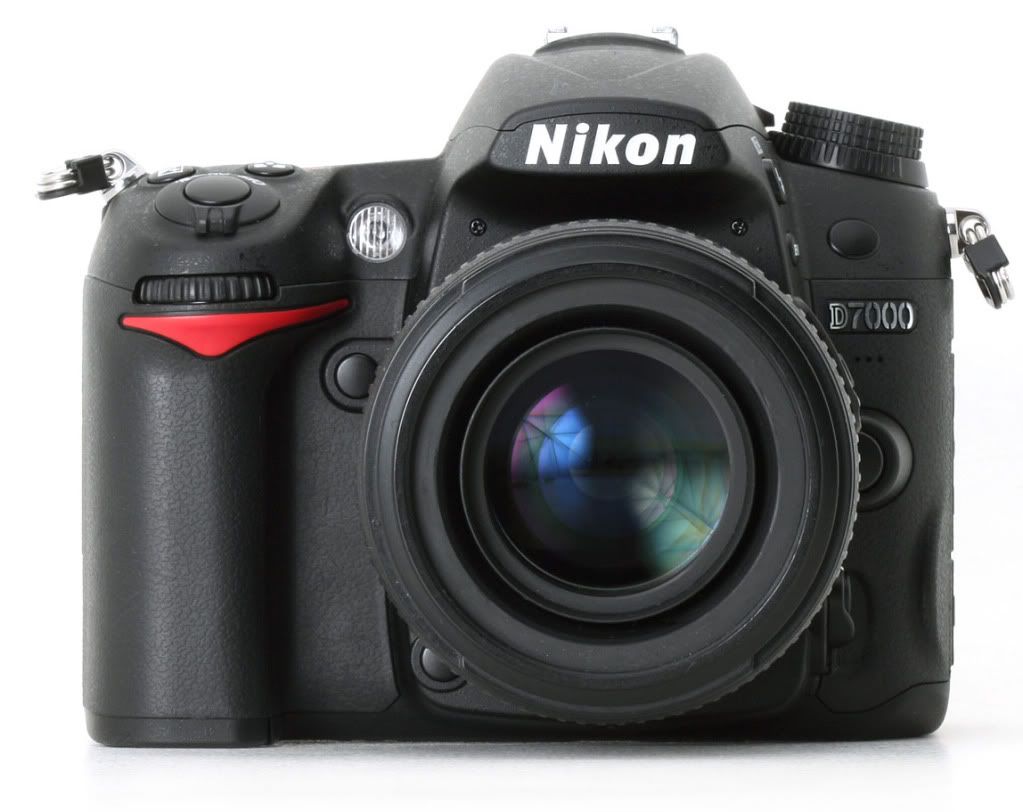
Nikon has (finally) released the successor to the aging D90. The new D7000 slots into the mid-tier ranking of the Nikon DSLR hierarchy, promising performance with a new 16-megapixel CMOS sensor and a faster 'Expeed 2' processor. One of the key highlights is the inclusion of a magnesium alloy body, which until now was only reserved for the higher-end Nikon body. This is interesting because while Canon has been systematically shifting their mid-tier bodies (such as the EOS 60D) downwards in terms of features and specs, we have Nikon actually moving the other way up by including better build for their mid-tier bodies. The Nikon D7000 features a high res 920k 3" LCD and Full HD 1080p 24 frames movie recording capabilities. Looks like the Nikon camp has unleashed a powerful challenger this time round…
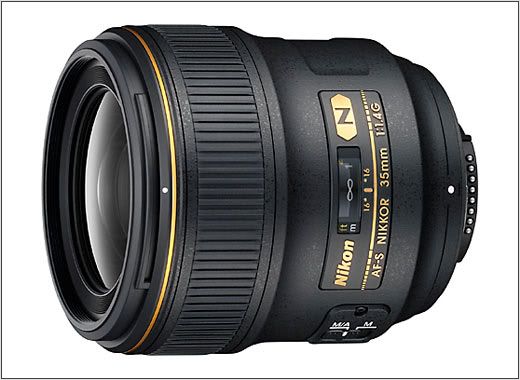
Another interesting development comes in the form of the AF-S NIKKOR 35mm f/1.4G. This wide-angle prime lens holds 10 elements in seven groups, including one aspherical glass element, and incorporates Silent Wave Motor (SWM) for quieter auto-focusing, along with Nano-Crystal coating to reduce flare. It will definitely be a welcome addition to the camera bags of street photographers, journalists and portrait photographers looking to capture street photos and environmental portraits in low available light.
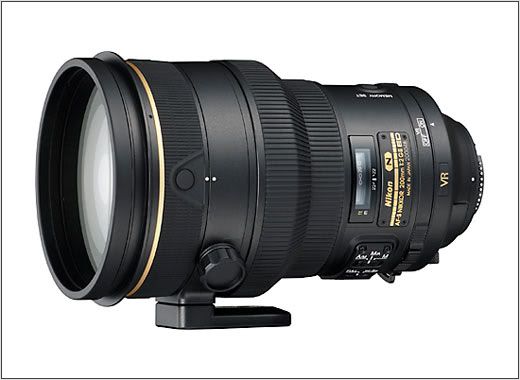
And finally, Nikon has also updated its 200mm F2 VR professional lens to Mark II. Although the optical formula remains unchanged, the new AF-S Nikkor 200mm F2G ED VR II utilizes the second generation of Nikon's Vibration Reduction technology (VR II), as well as the company's proprietary nano-crystal coating to reduce ghosting and flare.
Another interesting development comes in the form of the AF-S NIKKOR 35mm f/1.4G. This wide-angle prime lens holds 10 elements in seven groups, including one aspherical glass element, and incorporates Silent Wave Motor (SWM) for quieter auto-focusing, along with Nano-Crystal coating to reduce flare. It will definitely be a welcome addition to the camera bags of street photographers, journalists and portrait photographers looking to capture street photos and environmental portraits in low available light.
And finally, Nikon has also updated its 200mm F2 VR professional lens to Mark II. Although the optical formula remains unchanged, the new AF-S Nikkor 200mm F2G ED VR II utilizes the second generation of Nikon's Vibration Reduction technology (VR II), as well as the company's proprietary nano-crystal coating to reduce ghosting and flare.
Thursday, August 26, 2010
Canon launches EOS 60D and slew of lenses!
Labels:
announcement,
Canon
0
comments
Right after Nikon's announcement of a DSLR body and a slew of lenses, Canon found it fitting to announce the launch of products of the same magnitude! With the much-anticipated (and much-leaked) EOS 60D, Canon has a couple of interesting lenses in the line-up as well!
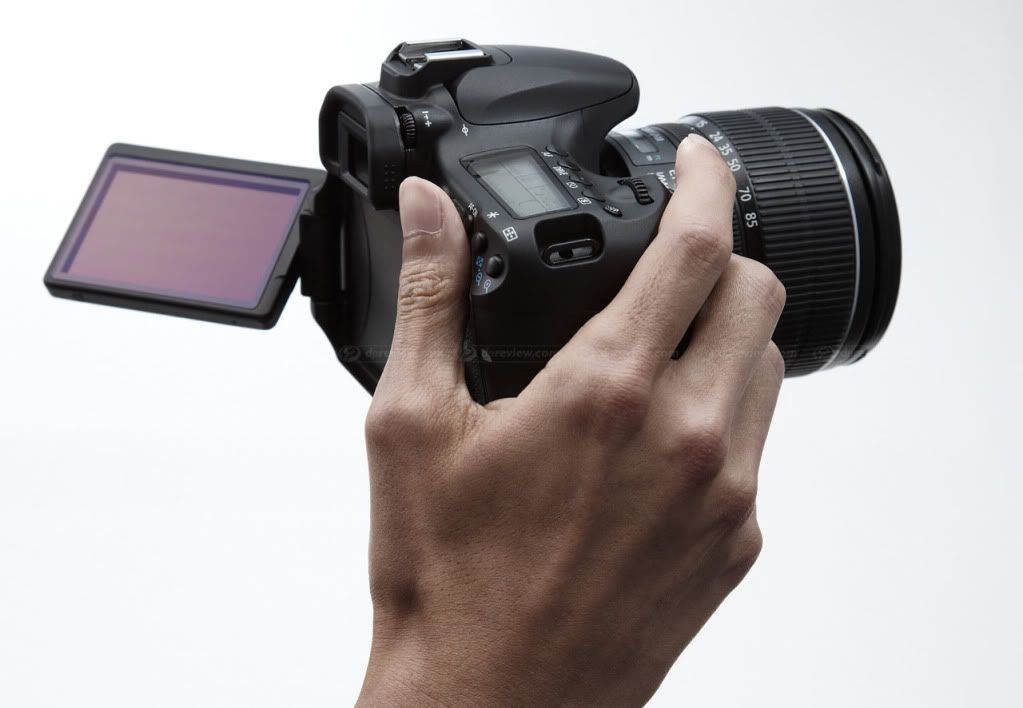
The new 18MP EOS 60D features a more compact body than its predecessor and uses SD cards, differentiating (and perhaps lowering its position within the family) from the EOS 7D. Interestingly, it scavenges parts from other bodies, utilizing the 3" LCD (107k) from the EOS 550D and the autofocus module from EOS 50D (perhaps not to usurp the "AF speed-king" position of 7D). It does however share the same video capability as the EOS 7D (very clever positioning of features).
What really differentiates the new EOS 60D from its predecessor is the articulating (or pivoting) LCD, which allows users to compose from various angles not traditionally possible by looking through a viewfinder. It's the first time a Canon EOS feature a rotating LCD, which Nikon and Sony already have launched in their DSLRs. It will be interesting to see how this revolutionary (for EOS series) screen go down with Canon users. More importantly, the launch of the EOS 60D has shown a fundamental shift (along with the introduction of the EOS 7D) in product positioning against Nikon and Sony.
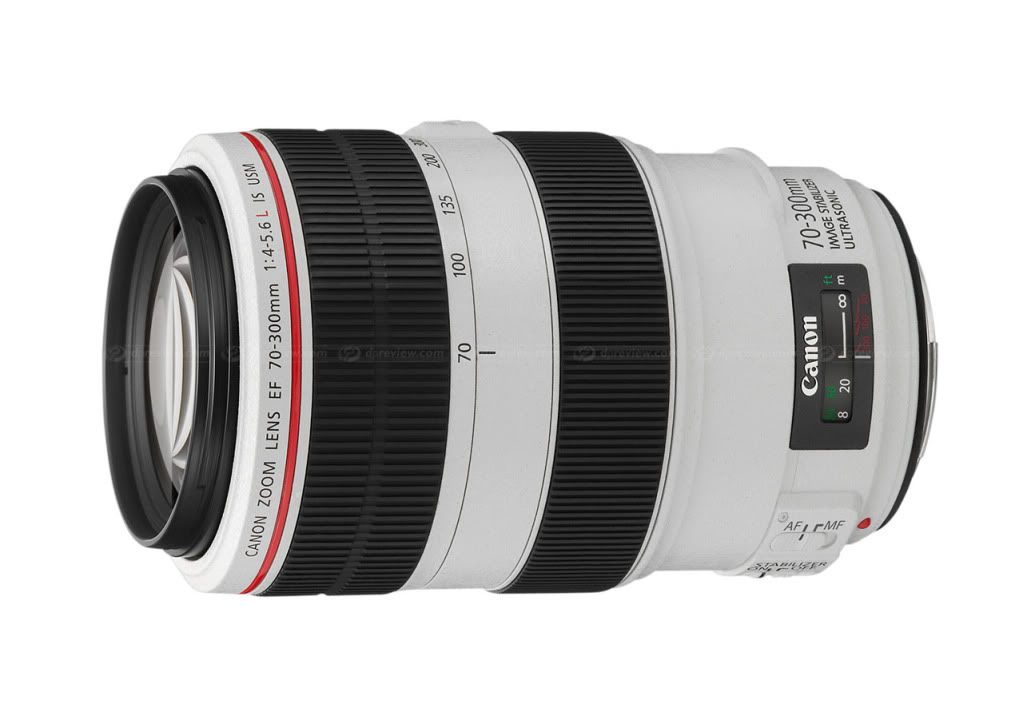
Canon L-series of lenses have always signified exceptional performance, although most people will readily relate the red ring to expensive pricing and fast aperture lenses. That's why it exceptionally surprising (or shocking) to see that Canon is releasing a EF 70-300mm f/4-5.6 L IS USM lens, which has a aperture range one would relate to a consumer lens. Canon states that it's positioned as an "affordable" L lens, but seriously this lens really seem out-of-place in the L-series line-up. I'm sure this lens can deliver uber-sharp performance, but I can't imagine the board-room discussions and internal controversy when they decided to label it as a L-lens. It sounds good with ring-type USM motor, weatherproof construction, and a 4-stop image stabilization, but one should always remember that the L-program is very much a marketing initiative as well as a technical classification. Labeling this lens as a L-series is a mistake in my opinion, but we shall leave it to history to judge if Canon is right.
Leaving disappointments behind, Canon launched an interesting lens in the form of a EF 8-15mm f/4 L USM, which is claimed as the "world's first fisheye zoom lens to offer both circular and full frame images". Turn it to the 8mm focal length, and you'll get the signature circular fish-eye effect on a full-frame sensor. Turn it towards the 15mm setting, and you're looking at more conventional rectilinear wide-angle images. It's a very interesting lens, even though I'm not sure how many people will actually need such a lens. Get ready for a slew of fish-eye images… argh!
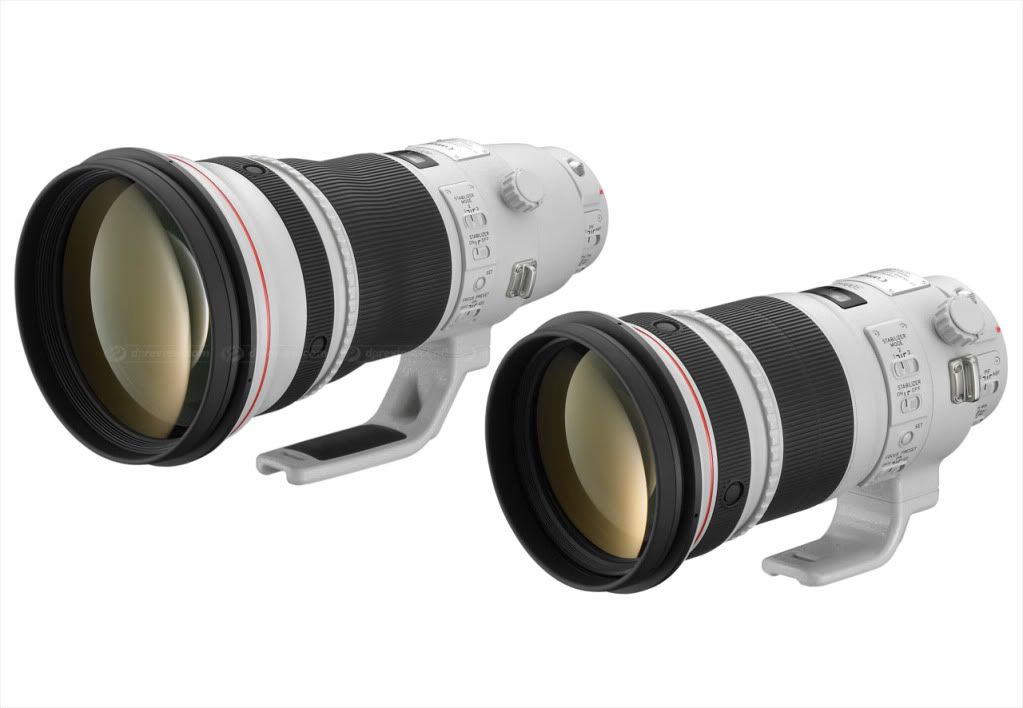
Canon has always excelled in super-telephoto lenses, and I'm sure sports and wild-life photographers will be excited to hear about the updated EF 300mm f/2.8 IS II and EF 400mm f/2.8 IS II USM lenses. More than superficial updates, the new lenses feature completely redesigned optics as well as the latest IS technology. The new EF 400mm lens is 28% lighter than its predecessor, thanks to the use of magnesium alloy construction.
The new 18MP EOS 60D features a more compact body than its predecessor and uses SD cards, differentiating (and perhaps lowering its position within the family) from the EOS 7D. Interestingly, it scavenges parts from other bodies, utilizing the 3" LCD (107k) from the EOS 550D and the autofocus module from EOS 50D (perhaps not to usurp the "AF speed-king" position of 7D). It does however share the same video capability as the EOS 7D (very clever positioning of features).
What really differentiates the new EOS 60D from its predecessor is the articulating (or pivoting) LCD, which allows users to compose from various angles not traditionally possible by looking through a viewfinder. It's the first time a Canon EOS feature a rotating LCD, which Nikon and Sony already have launched in their DSLRs. It will be interesting to see how this revolutionary (for EOS series) screen go down with Canon users. More importantly, the launch of the EOS 60D has shown a fundamental shift (along with the introduction of the EOS 7D) in product positioning against Nikon and Sony.
Canon L-series of lenses have always signified exceptional performance, although most people will readily relate the red ring to expensive pricing and fast aperture lenses. That's why it exceptionally surprising (or shocking) to see that Canon is releasing a EF 70-300mm f/4-5.6 L IS USM lens, which has a aperture range one would relate to a consumer lens. Canon states that it's positioned as an "affordable" L lens, but seriously this lens really seem out-of-place in the L-series line-up. I'm sure this lens can deliver uber-sharp performance, but I can't imagine the board-room discussions and internal controversy when they decided to label it as a L-lens. It sounds good with ring-type USM motor, weatherproof construction, and a 4-stop image stabilization, but one should always remember that the L-program is very much a marketing initiative as well as a technical classification. Labeling this lens as a L-series is a mistake in my opinion, but we shall leave it to history to judge if Canon is right.
Leaving disappointments behind, Canon launched an interesting lens in the form of a EF 8-15mm f/4 L USM, which is claimed as the "world's first fisheye zoom lens to offer both circular and full frame images". Turn it to the 8mm focal length, and you'll get the signature circular fish-eye effect on a full-frame sensor. Turn it towards the 15mm setting, and you're looking at more conventional rectilinear wide-angle images. It's a very interesting lens, even though I'm not sure how many people will actually need such a lens. Get ready for a slew of fish-eye images… argh!
Canon has always excelled in super-telephoto lenses, and I'm sure sports and wild-life photographers will be excited to hear about the updated EF 300mm f/2.8 IS II and EF 400mm f/2.8 IS II USM lenses. More than superficial updates, the new lenses feature completely redesigned optics as well as the latest IS technology. The new EF 400mm lens is 28% lighter than its predecessor, thanks to the use of magnesium alloy construction.
Thursday, August 19, 2010
Nikon lets the horses loose!
Labels:
announcement,
Nikon
0
comments
Nikon launches new entry-level DSLR, and four new lenses
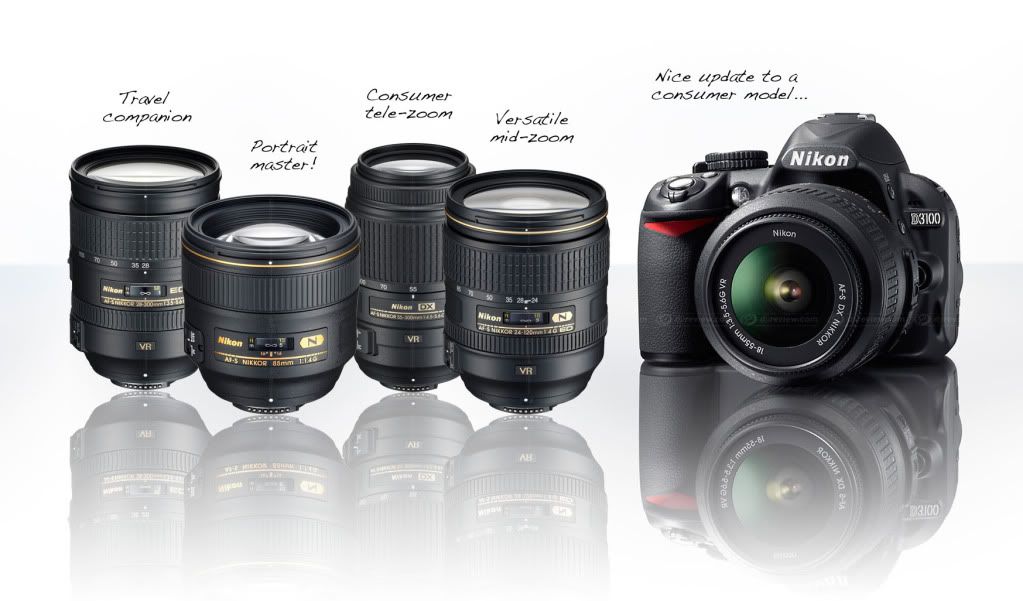
You know what the say about the weather. It’s always calm before a storm. So when Nikon kept silent for so many months, you’d expect something to burst out from the gates of Nippon Kogaku! It turns out that the Japanese giant has been busy, with its optical department hard at work churning out four new lenses! And the popular Nikon D3000 received an update with higher resolution and HD video recording…
The new Nikon D3100 features the same user-friendly interface with a Guide Mode, making it easy for a novice to learn photography as if there was a instructor by the side. The difference is that the new D3100 features an updated 14.2MP sensor, full HD (1920x1080) recording, as well as the popular Live View mode. All-in-all, a nice update to bring the entry-level model up to speed with the competitors.
The Canon EF 24-105mm f/4 L IS is one of my favourite lens, delivering sharpness and versatile mid-zoom range in a compact package with image stabilization. And this has been missing from the Nikon line-up for the longest time! And now Nikon has launched the AF-S NIKKOR 24-120mm f/4G ED VR, making it possible for Nikon users to enjoy a useful mid-range zoom without worries about slow shutter speed. Personally, this is really great news for FX format Nikon users. But guess what? It’d be perfect if Nikon launched a 70-200mm f/4 VR to match it as well! Ahem…
The NIKKOR 85mm f/1.4D IF has always been a legendary lens in the Nikon community, delivering superlative portraits. But it was getting old in age with the classic formula, and the autofocus speed meant that it did not excel in sports photography where it’s high-speed could really help in achieving high shutter-speeds. So here comes the AF-S NIKKOR 85mm f/1.4G powered by Silent Wave Motor for fast focus speed. The successor also features a totally new optical design as well as Nikon’s proprietary Nano Crystal Coat for rich colours and high contrast. It’s 9-blade aperture diaphragm will also help in delivering uber-smooth bokeh for portraits. I only wished that Nikon has thrown in VR as well to make this a killer portrait lens!
For travel photographers who secretly wish for a Nikon super-zoom to fit their full-frame Nikon DSLR, (and always casting envious glasses at the DX users with their Nikon 18-200mm DX), your wish just came true with the AF-S Nikkor 28-300mm f/3.5-5.6G ED VR! It has everything you need for travel: a wide zoom range, ED lens for great quality images, VR technology for steady shots, and a minimum focusing distance of just 50 cm. Sounds yummy to a travel photographer who just wants to stick to one lens!
And finally, the Nikon AF-S DX Nikkor 55-300mm f/4.5-5.6G ED VR is designed to be a matching pair with the 18-55mm kit lens, starting off where the kit lens stops at 55mm and going all the way up to 300mm (it’s actually 450mm considering the crop factor!). Silent Wave delivers quiet focusing, while VR makes sure you get nice shots despite your shaky hands.
Wednesday, July 28, 2010
Sony launches trio of prime lenses
Labels:
Alpha,
announcement,
lens,
Sony
0
comments
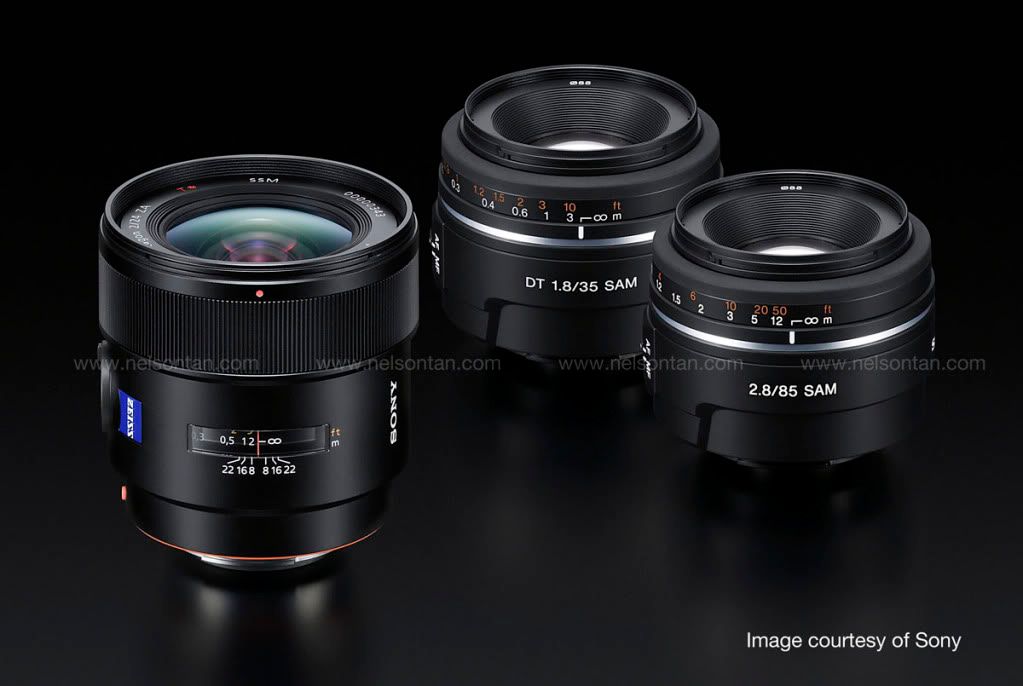
After wading painfully through Sony's terrible press release (which looks like it was written for amateurs by amateurs), it dawned on me that Sony has launched three prime lenses for its Alpha DSLR system, taking the total to more than 30 lenses in the entire range. The jewel in the trio must be the full-frame Carl Zeiss Distagon T* 24mm F2 SSM, a relatively fast wide-angle prime made by the esteemed German optics manufacturer. Photographers should love the 0.19m minimum focus distance (great for dramatic effects) and a nine-blade circular aperture designed for smooth bokeh (out-of-focus areas). Focus should be fast and quiet, thanks to its built-in SSM (Super Sonic wave Motor).
The Sony 85mm F2.8 SAM represents the first full frame lens in the "Easy Choice" lens range, which are designated to be more affordable. "Easy Choice" is such a tacky and terrible marketing name, but thank goodness it does not appear anywhere on the lens! The full-frame 85mm is a traditional choice for portrait photography, and so the 0.6m minimum focusing distance (which Sony claims is the shortest in its class) should come in useful. At 175 grams, the Sony 85mm F2.8 SAM is extremely compact and light, although f/2.8 seems a tad slow for a portrait lens (compared to Canon and Nikon's offering of 85mm f/1.8 lenses).
The Sony DT 35mm F1.8 SAM is designed as a fast wide-angle lens for APS-C sensor DSLR only. At 170 grams, it's a compact and light addition to the camera bag, and it features the shortest minimum focus distance of just 23 cm, which Sony claims as shortest in its class. All of these lenses can be used on the NEX mirrorless cameras via the LA-EA1 adapter (manual focus mode only). The 24mm and 85mm lenses will start shipping from late September at retail prices of €1,250 and €250 respectively, followed by the 35mm which will be available from mid-October at a retail price of €200.
Tuesday, July 20, 2010
Sigma launches new 17-50mm F2.8 EX DC OS HSM lens
Labels:
announcement,
lens,
Sigma
0
comments
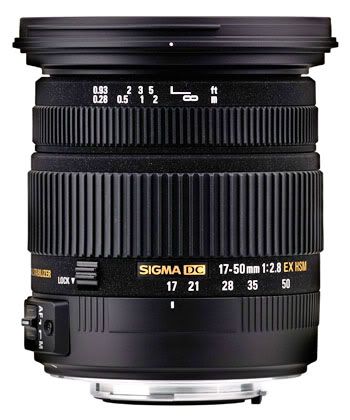
If you own APS-C DSLR and you're bemoaning the lack of a image-stabilizer on your fast wide-angle zoom, you're not alone - or at least that's what Sigma thinks. For years, manufacturers (with the exception of Canon who has a EF-S 17-55 f/2.8 IS) have not heeded the pleas of consumers who want image-stabilizer on wide-angle zooms, perhaps on the rationale that users can get away with lower shutter speeds on such focal lengths. However, Sigma chose to listen to the voices of the customers, and they have launched the new Sigma 17-50mm F2.8 EX DC OS HSM lens!
Off the specs sheet, the new Sigma ultra-wide angle looks brilliant. It covers an ultra-wide focal range, even more than the traditional 16-35mm f/2.8 lenses we're used to, and it throws in an image-stabilizer mechanism to ensure sharp images even in low-light shooting conditions. Other goodies include a compact dimension of just 3.6 inches, minimum focus distance of 11 inches (through the entire zoom range), new FLD optical glass, Hyper Sonic Motor (HSM) for quiet and high-speed auto focus, and a rounded seven-blade diaphragm for great out-of-focus background.
Interestingly, Sigma has chosen to launch the Canon mount first (at US$980), and subsequently for Nikon, Sigma, Sony and Pentax mounts in the coming weeks. A weird choice given that Canon users already have the EF-S 17-55 f/2.8 IS, and it's the other brands owners which need this unique configuration for their systems. Sigma has once again chosen their battle very carefully by delivering a niche product for the numerous DSLRs owners out there, instead of butting head-on with the camera brands by offering exactly the same focal length and aperture. And this has provided photographers with more options when it comes to camera gear and budgets. Sigma is indeed looking at the world through a different lens!
Off the specs sheet, the new Sigma ultra-wide angle looks brilliant. It covers an ultra-wide focal range, even more than the traditional 16-35mm f/2.8 lenses we're used to, and it throws in an image-stabilizer mechanism to ensure sharp images even in low-light shooting conditions. Other goodies include a compact dimension of just 3.6 inches, minimum focus distance of 11 inches (through the entire zoom range), new FLD optical glass, Hyper Sonic Motor (HSM) for quiet and high-speed auto focus, and a rounded seven-blade diaphragm for great out-of-focus background.
Interestingly, Sigma has chosen to launch the Canon mount first (at US$980), and subsequently for Nikon, Sigma, Sony and Pentax mounts in the coming weeks. A weird choice given that Canon users already have the EF-S 17-55 f/2.8 IS, and it's the other brands owners which need this unique configuration for their systems. Sigma has once again chosen their battle very carefully by delivering a niche product for the numerous DSLRs owners out there, instead of butting head-on with the camera brands by offering exactly the same focal length and aperture. And this has provided photographers with more options when it comes to camera gear and budgets. Sigma is indeed looking at the world through a different lens!
Monday, May 17, 2010
Sony’s new NEX cameras - very EVIL!
Labels:
Alpha,
announcement,
EVIL,
NEX,
Sony
0
comments
What are EVIL cameras?
Known affectionately by their informal acronym, Electronic Viewfinder Interchangeable Lens (EVIL) cameras belong to a growing new class of cameras that sit between the slim (but functionally limited) compact cameras and bulky (and powerful) DSLRs.
Compact cameras are slim and great to have around for point-and-shoot photography, but they are very limited in terms of control and the lens cannot be interchanged. DSLR cameras are bulky and not something you want to lug around for casual photography, but they offer the ultimate speed and control, together with a host of interchangeable lenses to expand your horizon.
EVIL cameras incorporate the controls that photographers are used to having with their DSLRs (such as aperture and shutter), as well as the flexibility of having interchangeable lens. At the same time, the size of the EVIL cameras are much smaller than DSLRs because they do not have a reflex mirror. Instead, they incorporate an electronic viewfinder to allow users to view and compose their photos. Both in terms of size and functionality, they are smack in-between the compact cameras and pukka DSLRs.
The EVIL concept has just taken root recently, but there’re already of host of models in the category. The Panasonic GF series, Olympus E-P series and Samsung NX series are some of the cameras in the fray. Most of these cameras belong to the micro four-thirds sensor category, with the exception of Samsung’s NX10 which is using APS-sized sensor as well.
The drawbacks of the EVIL cameras include slower focusing than DSLRs, because they use contrast focusing instead of the faster phase detection focusing of DSLRs. In dark and low contrast situation, the focusing can be abysmal. In addition, the range of lenses dedicated for the EVIL system can be pretty limiting because these camera systems are still in their infancy.
For traditional SLR users, the concept of using a viewfinder to compose the photos is sacrilegious. Gone are the crystal clear view of a optical viewfinder afforded by the prism and reflex mirror, replaced by dark, dingy and pixilated LCD screens. The latest LCD screens on EVIL cameras deliver excellent resolution and results, but in bright sunlight the glare can make LCDs difficult to view. But to look on the bright side, EVIL users do not need to contend with dealing with vibrations from mirror flip.
Sony’s new Alpha NEX-3 and NEX-5
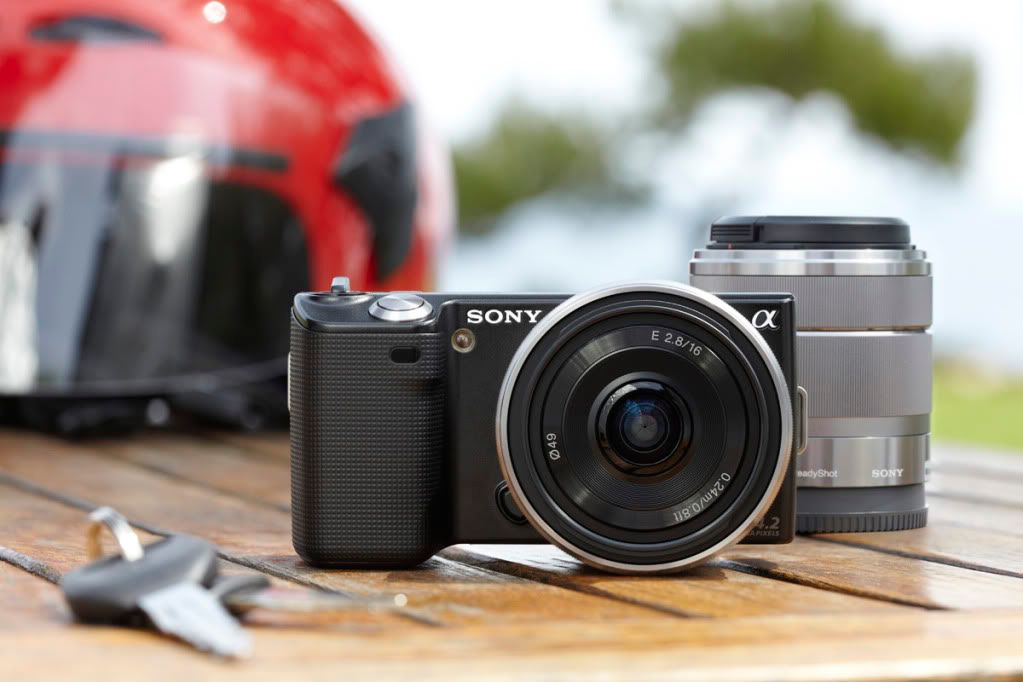
Sony has just hopped onto the EVIL bandwagon with their new Alpha (α) NEX-3 and NEX-5 mirrorless interchangeable lens cameras. And unlike most of their evil cousins (sorry… couldn’t resist the pun) the α NEX cameras incorporate a large14 mega pixel APS HD CMOS sensor APS size sensor, promising to deliver DSLR quality with ultra-compact dimensions.
Both the new Sony NEX-3 and NEX-5 share many common features, including high-speed burst of full-resolution images at up to 7fps, and a high-performance 3” tilt LCD. The Sony NEX-cameras include a cool Sweep Panorama function that allows users to just press the shutter button and swing the camera side-to-side or up and down, and a high-speed burst of frames is stitched together automatically to create 23 megapixel panoramas with a 226 degree effective angle of view. Sounds cool even though I wonder how often I’d use this function.
Unlike its DSLR cousins in the Alpha family, the NEX-cameras are well-endowed in video functionality. The NEX-3 offers 720p HD video capture, while the NEX-5 delivers full 1080i AVCHD video capabilities.
I have stated time and again that a camera is only as good as the lenses it can use, and the Sony NEX system is definitely keen to avoid being stranded without a good lens system. The cameras are using a new E-mount lens system (groan), BUT they are compatible with α DSLR lenses with optional Mount Adaptor.
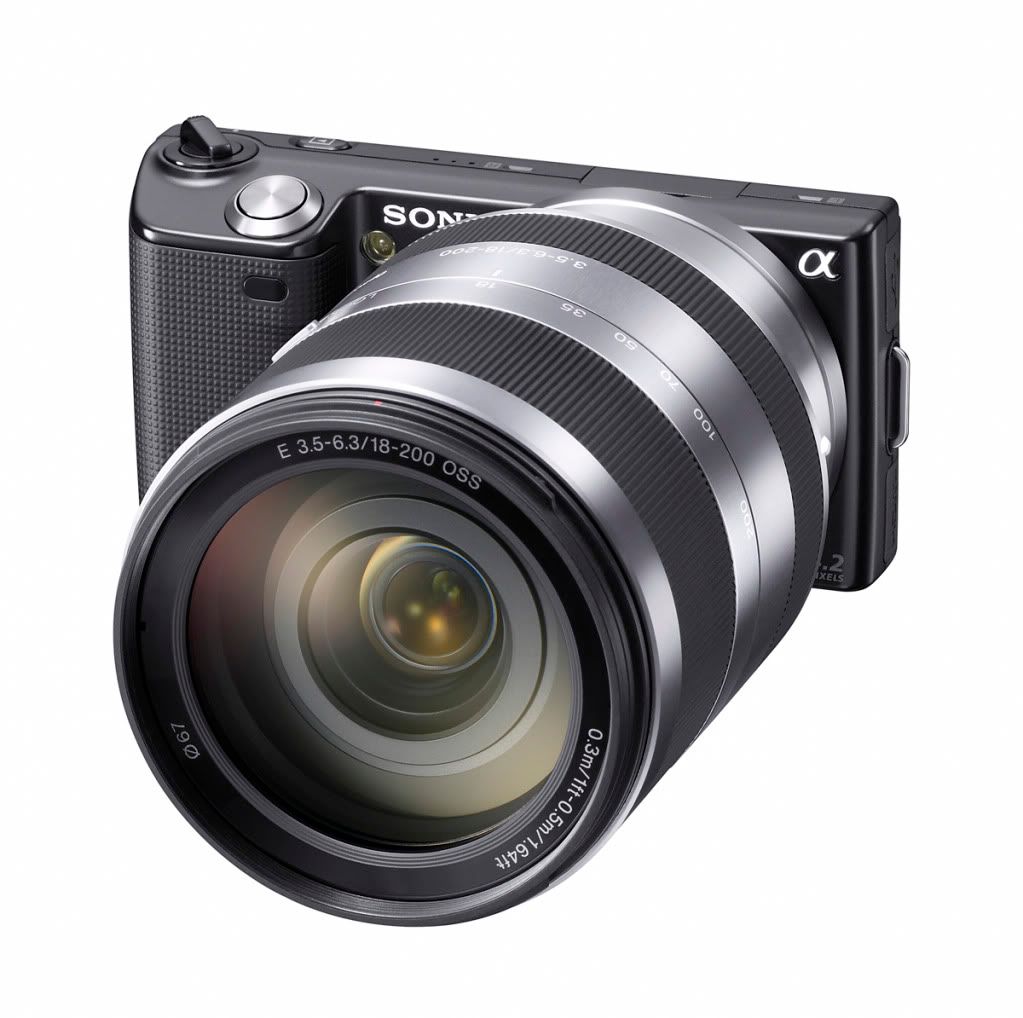
There are 3 E-mount lenses at the time of the launch of the new Sony NEX system. Most users will purchase the 18-55mm f/3.5-5.6 zoom with image stabilizer, which comes in kit form with the cameras. For the most compact form factor, the 16mm f/2.8 pancake delivers a 24mm equivalent view, while being extremely small and offering a relatively bright f/2.8 max aperture. For those who want it all, the 18-200mm F3.5-6.3 superzoom with image-stabilizer is an excellent choice, even though it is so much larger than the camera!
My thoughts on the Sony Alpha NEX system
A compact form interchangeable lens camera with a large sensor sounds like a great idea, and Sony will definitely want to make a dent in the universe with their new foray into the EVIL territory (since it’s having a hard time against Nikon and Canon in the DSLR arena). The system sounds promising, but it is difficult to determine its potential without checking out its actual performance.
There’re several things that can potentially go wrong. Focusing speed of EVIL cameras has always lagged behind DSLRs, and sensor noise-control hasn’t exactly been the strength of Sony. I am not too enamored about the looks of the NEX system, given that the design looks lopsided (more lens than camera I’d say), and the styling of the grip looks like it came straight out of 1985. The handling is suspect, especially at longer focal length where users do not have the stability of pressing their cameras against their face as in the case of a DSLR.
However, if you’ve always been looking for a small form camera with a large sensor size and interchangeable lens, you can only choose between the Samsung NX10 and Sony NEX-system. Oh… if you’re feeling rich and do not need a interchangeable lens, do not forget the Leica X1 with its Leica 28mm f/2.8 lens!
Known affectionately by their informal acronym, Electronic Viewfinder Interchangeable Lens (EVIL) cameras belong to a growing new class of cameras that sit between the slim (but functionally limited) compact cameras and bulky (and powerful) DSLRs.
Compact cameras are slim and great to have around for point-and-shoot photography, but they are very limited in terms of control and the lens cannot be interchanged. DSLR cameras are bulky and not something you want to lug around for casual photography, but they offer the ultimate speed and control, together with a host of interchangeable lenses to expand your horizon.
EVIL cameras incorporate the controls that photographers are used to having with their DSLRs (such as aperture and shutter), as well as the flexibility of having interchangeable lens. At the same time, the size of the EVIL cameras are much smaller than DSLRs because they do not have a reflex mirror. Instead, they incorporate an electronic viewfinder to allow users to view and compose their photos. Both in terms of size and functionality, they are smack in-between the compact cameras and pukka DSLRs.
The EVIL concept has just taken root recently, but there’re already of host of models in the category. The Panasonic GF series, Olympus E-P series and Samsung NX series are some of the cameras in the fray. Most of these cameras belong to the micro four-thirds sensor category, with the exception of Samsung’s NX10 which is using APS-sized sensor as well.
The drawbacks of the EVIL cameras include slower focusing than DSLRs, because they use contrast focusing instead of the faster phase detection focusing of DSLRs. In dark and low contrast situation, the focusing can be abysmal. In addition, the range of lenses dedicated for the EVIL system can be pretty limiting because these camera systems are still in their infancy.
For traditional SLR users, the concept of using a viewfinder to compose the photos is sacrilegious. Gone are the crystal clear view of a optical viewfinder afforded by the prism and reflex mirror, replaced by dark, dingy and pixilated LCD screens. The latest LCD screens on EVIL cameras deliver excellent resolution and results, but in bright sunlight the glare can make LCDs difficult to view. But to look on the bright side, EVIL users do not need to contend with dealing with vibrations from mirror flip.
Sony’s new Alpha NEX-3 and NEX-5
Sony has just hopped onto the EVIL bandwagon with their new Alpha (α) NEX-3 and NEX-5 mirrorless interchangeable lens cameras. And unlike most of their evil cousins (sorry… couldn’t resist the pun) the α NEX cameras incorporate a large14 mega pixel APS HD CMOS sensor APS size sensor, promising to deliver DSLR quality with ultra-compact dimensions.
Both the new Sony NEX-3 and NEX-5 share many common features, including high-speed burst of full-resolution images at up to 7fps, and a high-performance 3” tilt LCD. The Sony NEX-cameras include a cool Sweep Panorama function that allows users to just press the shutter button and swing the camera side-to-side or up and down, and a high-speed burst of frames is stitched together automatically to create 23 megapixel panoramas with a 226 degree effective angle of view. Sounds cool even though I wonder how often I’d use this function.
Unlike its DSLR cousins in the Alpha family, the NEX-cameras are well-endowed in video functionality. The NEX-3 offers 720p HD video capture, while the NEX-5 delivers full 1080i AVCHD video capabilities.
I have stated time and again that a camera is only as good as the lenses it can use, and the Sony NEX system is definitely keen to avoid being stranded without a good lens system. The cameras are using a new E-mount lens system (groan), BUT they are compatible with α DSLR lenses with optional Mount Adaptor.
There are 3 E-mount lenses at the time of the launch of the new Sony NEX system. Most users will purchase the 18-55mm f/3.5-5.6 zoom with image stabilizer, which comes in kit form with the cameras. For the most compact form factor, the 16mm f/2.8 pancake delivers a 24mm equivalent view, while being extremely small and offering a relatively bright f/2.8 max aperture. For those who want it all, the 18-200mm F3.5-6.3 superzoom with image-stabilizer is an excellent choice, even though it is so much larger than the camera!
My thoughts on the Sony Alpha NEX system
A compact form interchangeable lens camera with a large sensor sounds like a great idea, and Sony will definitely want to make a dent in the universe with their new foray into the EVIL territory (since it’s having a hard time against Nikon and Canon in the DSLR arena). The system sounds promising, but it is difficult to determine its potential without checking out its actual performance.
There’re several things that can potentially go wrong. Focusing speed of EVIL cameras has always lagged behind DSLRs, and sensor noise-control hasn’t exactly been the strength of Sony. I am not too enamored about the looks of the NEX system, given that the design looks lopsided (more lens than camera I’d say), and the styling of the grip looks like it came straight out of 1985. The handling is suspect, especially at longer focal length where users do not have the stability of pressing their cameras against their face as in the case of a DSLR.
However, if you’ve always been looking for a small form camera with a large sensor size and interchangeable lens, you can only choose between the Samsung NX10 and Sony NEX-system. Oh… if you’re feeling rich and do not need a interchangeable lens, do not forget the Leica X1 with its Leica 28mm f/2.8 lens!
Tuesday, April 27, 2010
Pimp your camera!
Labels:
announcement
0
comments
Think your camera is not bling enough? Can't bring yourself to glue some Swarovski crystals onto your camera? There's an easy way to pimp your camera and give it some personality! Check out the Gariz (not Garish fortunately) metallic plates for your camera! I think the stick-on for the compact cameras do look quite classy, although some people would probably think you stole the camera from P. Diddy himself.
The stickers for the DSLRs look quite daft though. But don't stop at your compacts - Garish, sorry I mean Gariz has stickers for mobile phones as well (yes, including the iconic iPhone). Just don't show Steve Jobs what you did to his precious...
Check out the Gariz website for yourself!
New Nikon 200-400mm f/4 launching soon
Labels:
announcement,
lens,
Nikon
0
comments
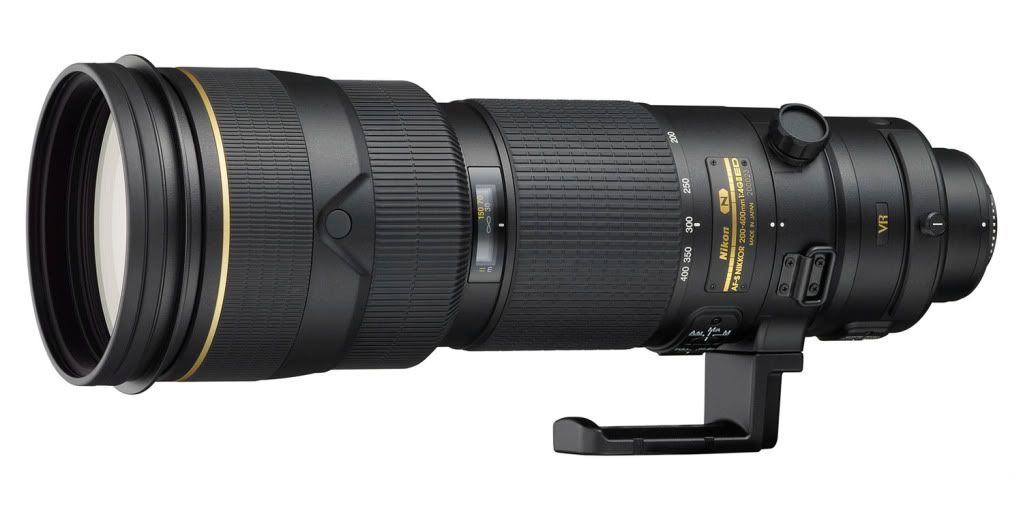
Nikon is set to launch a tweaked version of its 200-400mm f/4 VR by end of May. Featuring the same optical configuration and Silent Wave Focusing as its predecessor, the new AF-S Nikkor 200-400mm f/4G ED VR II looks to deliver the same optical performance and speed. However, Nikon improved its stabilization ability by incorporating four-stop VR II image stabilization, and the new lens will benefit greatly with Nikon's Nano Crystal Coat lens coating for reduced ghosting and flare.
It will come at a price though. The AF-S Nikkor 200-400mm f/4G ED VR II is expected to cost nearly US$7000, which squarely prices the lens out of reach for most but the most hardcore (and well-heeled) photographers. Who would buy such an expensive and huge lens? Nature photographers and sports photographers will certainly appreciate having the option to zoom at the super-telephoto range, as well as a relatively bright aperture of f/4 and enjoy the superlative performance of this ED lens as well (it has 24 lens elements in 17 groups with 4 ED elements!).
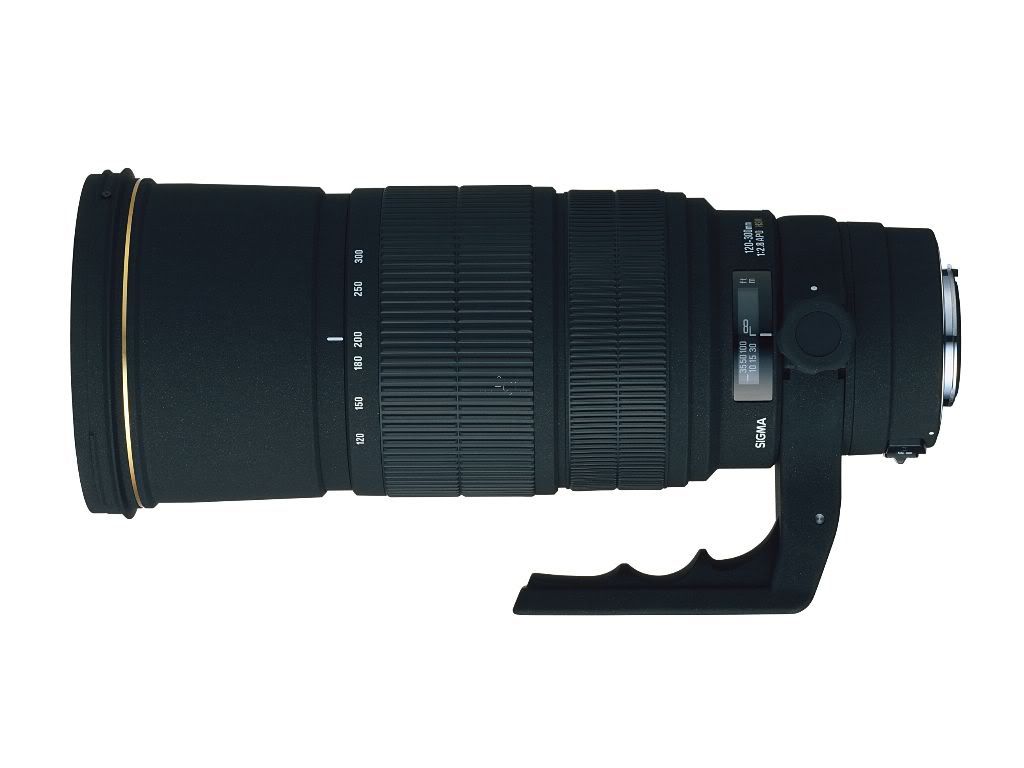
What other alternatives do you have to this Nikon? Perhaps you can look at the Sigma 120-300mm f/2.8EX DG APO HSM instead, with its bright f/2.8 aperture and much more economical US$4200 price tag. Add on a 1.5x teleconverter and you''ll have almost the same focal length range as this Nikon. You'll not get optical image stabilization (VR) with the Sigma though, which is a really useful feature on such a super-zoom.
Wednesday, April 14, 2010
Photoshop CS5 - so what's new?
Labels:
Adobe,
announcement,
Photoshop,
software
0
comments
Photoshop CS4 was not all that hot, and Adobe knows it as well. Many photographers have criticized the software giant of churning out new versions of Photoshop too quickly and increasing the prices, without significant improvements in the versions. Worse still, Adobe received the short end of the stick by refusing to integrate RAW support for newer cameras such as the Canon EOS 5D Mk II for Photoshop CS3, in an apparent move to "convince" customers to upgrade. As far as we know, sales of Photoshop CS4 was not as spectacular as Adobe wanted it to be.
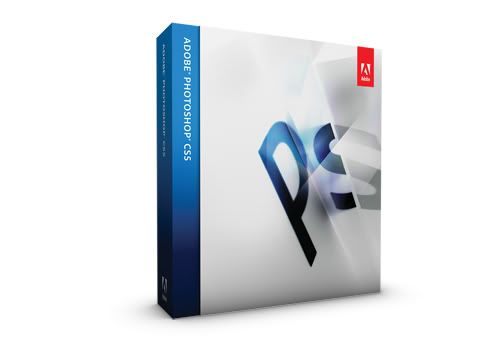
Now Adobe is back with Photoshop CS5. Has the company wizened up to the consumer's requests and are they listening to feedback? Well, it's difficult to say for sure without running through the software, but based on the list of new features, the new Photoshop CS5 certainly looks very interesting for those of us on the previous versions of Photoshop. Rob Galbraith has a nice summary of the new features in CS5, so be sure to check it out!
Thursday, April 8, 2010
Sneak peak at Photoshop CS5 new features
Labels:
Adobe,
announcement,
software,
Youtube
0
comments
For a digital photographer, having good Adobe Photoshop knowledge is an essential skill set to improving the images post-exposure. And nothing even comes close to Adobe when it comes to digital imaging software, with incredible tools on hand to tackle every conceivable problem. And talking about "conceivable problem", you've got to give it to the Adobe guys to think of "every conceivable problem", because they seem to be able to conjure up new tools when you think that the current version of Photoshop is as powerful as it can get!
So with Adobe Photoshop CS5 launching round the corner on 12th April (that's next Monday), what can we expect from Adobe this time around. Well, Adobe has been teasing photographers with sneak previews of some new features, and they look pretty neat. I'll definitely look forward to the Content-Aware Fill as a key motivation for upgrade, seeing how much time it'll save me from cloning (watch the video - this new technology makes the Healing Brush look so yesterday!).
The Puppet Warp tool (strange name eh?) also looks fascinating, and you'd might think it's a trivial tool by watching the first half of the video. But keep on watching, and you'd start to realize the potential of the Puppet Warp tool for photographers and designers alike.
P.S: My friend just notified me of a spoof on the Content-Aware Fill feature. It's pretty hilarious, but not related to photography so I'm not putting up a direct link. If you're open for a good laugh, check out http://www.youtube.com/watch?v=3ScWu7pG7r0
So with Adobe Photoshop CS5 launching round the corner on 12th April (that's next Monday), what can we expect from Adobe this time around. Well, Adobe has been teasing photographers with sneak previews of some new features, and they look pretty neat. I'll definitely look forward to the Content-Aware Fill as a key motivation for upgrade, seeing how much time it'll save me from cloning (watch the video - this new technology makes the Healing Brush look so yesterday!).
The Puppet Warp tool (strange name eh?) also looks fascinating, and you'd might think it's a trivial tool by watching the first half of the video. But keep on watching, and you'd start to realize the potential of the Puppet Warp tool for photographers and designers alike.
P.S: My friend just notified me of a spoof on the Content-Aware Fill feature. It's pretty hilarious, but not related to photography so I'm not putting up a direct link. If you're open for a good laugh, check out http://www.youtube.com/watch?v=3ScWu7pG7r0
Wednesday, April 7, 2010
Launch of new photo website and photo forum!
Labels:
announcement,
Editor's notes,
forum,
website
0
comments
Ladies and gentlemen, it gives me great pleasure to announce the launch of two major projects I've been working on - my revamped photography website and a new photography forum!
Nelson's Photography Website
(www.nelsontan.com)
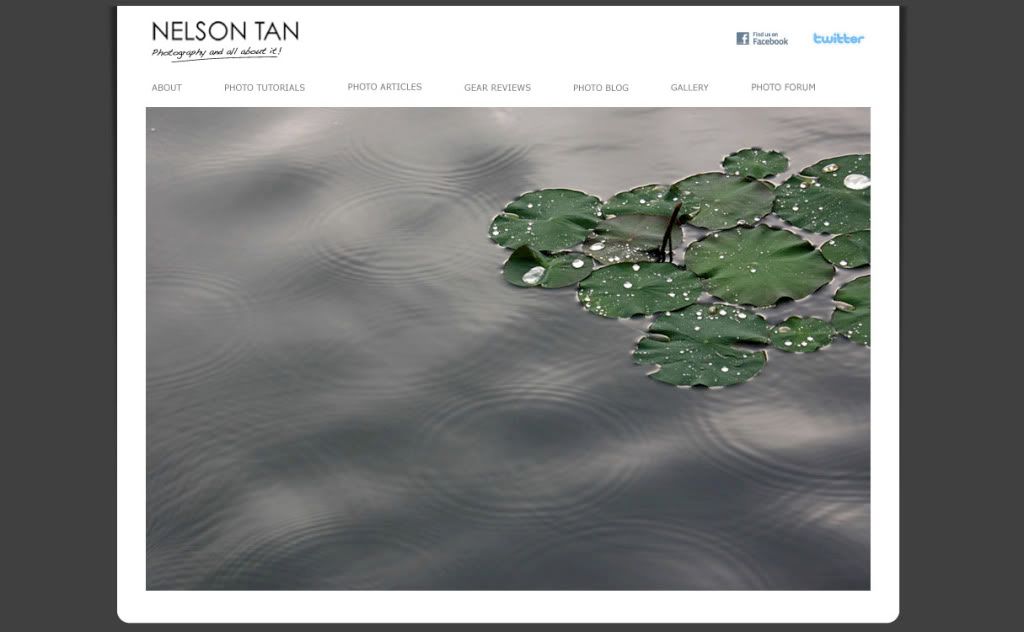
My photography website at www.nelsontan.com has been around for quite a while now, but this revamp gives it a brand new look to bring it up to date. In addition, you will also find new articles online as well as some reviews I've done lately. If you know someone who wants to learn photography, be sure to visit the website because I've a great new syllabus to help anyone pick up photography online!
Photomiki photography forum
(http://www.photomiki.com/forum.php)
My buddy David Ng (of GoDigital fame) and I decided to do something for the photo community, and what better ways are there to build knowledge than to build on the immense experience of the photo community? So after much huffing and puffing, we managed to set up the Photomiki photography forum! Remember to visit the photo forum to share your knowledge or ask some questions, or just to buy and sell your camera gear!
Leave some comments on you like my new projects!
Nelson's Photography Website
(www.nelsontan.com)
My photography website at www.nelsontan.com has been around for quite a while now, but this revamp gives it a brand new look to bring it up to date. In addition, you will also find new articles online as well as some reviews I've done lately. If you know someone who wants to learn photography, be sure to visit the website because I've a great new syllabus to help anyone pick up photography online!
Photomiki photography forum
(http://www.photomiki.com/forum.php)
My buddy David Ng (of GoDigital fame) and I decided to do something for the photo community, and what better ways are there to build knowledge than to build on the immense experience of the photo community? So after much huffing and puffing, we managed to set up the Photomiki photography forum! Remember to visit the photo forum to share your knowledge or ask some questions, or just to buy and sell your camera gear!
Leave some comments on you like my new projects!
Saturday, March 27, 2010
Polaroids are back again!
Labels:
announcement,
Polaroid
0
comments
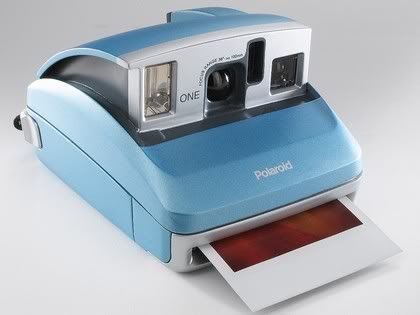
Remember the good old days of instant Polaroid photos? I sure do, because I have a Polaroid Spectra 2 in my camera collection gathering dust, because Polaroid decided to discontinue instant film in 2008.
The world’s entire inventory of 300 million working Polaroid cameras seem destined for the landfill, until a Netherlands-based group, The Impossible Project, decided to take on the improbable task of restarting the manufacture instant film again. The idea seems laughable, until the group held a press conference on 25th March 2010 and announced to the astonished journalists that the first packs of instant film will start shipping that every day!
For now, the instant films will be compatible with Polaroid’s SX-70 cameras and the 600-series cameras, and they are either monochrome or sephia (colour versions are on their way!). According to Dr. Florian Kaps of the Impossible Project group, the new films have totally different technology from the Polaroid predecessors, having invested US$3.1 million to develop the new emulsion.
The new instant film retails for US$21 and contains 8 exposures per pack. They will be available for sale online at the Impossible Project website, at select retailers in the U.S., Europe and Asia, and also at The Impossible Project store in Berlin.
Oh… in the meantime while you’re waiting for the films, you can convert your digital images to look like Polaroid films with this funky software from Poladroid (not related to Polaroid or the Impossible Project). Try it… it’s free and fun!
Wednesday, March 17, 2010
Pentax - Terminator, or terminated?
Labels:
announcement,
medium format,
Pentax
1 comments
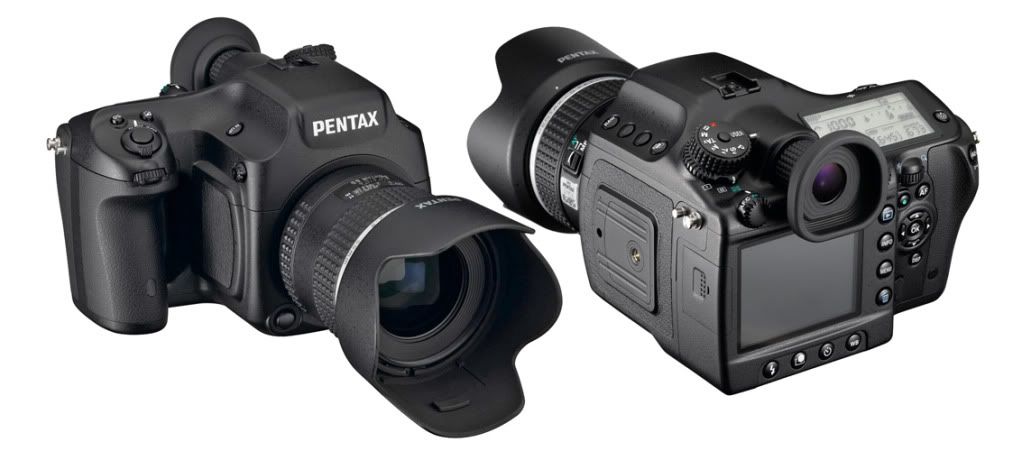
Just like the Terminator movies, Arnold Schwarzenegger always returns with “I’ll be back”. So just when almost everyone has written off Pentax, they’re back with (gasp!) a medium format digital camera!
I suspect many readers are not familiar with Pentax’s history, so here’s a short jaunt down memory lane. Pentax was a big brand in the past, and it had glorious cameras including iconic medium-format ones such as the Pentax 645 and Pentax 67. Pentax then has a history of doing things differently, because while most brands designed their cameras to have interchangeable film backs, Pentax alone decided that users should not be allowed to change films.
As made evident by history, this decision did not resonate well with photographers. So I’m befuddled when Pentax decided to wade into the medium format digital camera market – which is highly saturated, extremely competitive and limited in size. What aghast me even more – is the decision to incorporate a non-interchangeable digital back! There are a few arguments against such an arrangement – you can’t clean the sensor easily unlike interchangeable digital backs. The Pentax 645D has ultrasonic dust cleaning function, but we all know some spots cannot be removed that easily. Secondly, you cannot upgrade the sensor without throwing away the entire camera. Or if the camera jams on you during a shoot, you cannot change the back onto another working camera body. And finally, you cannot use the expensive digital sensor on another camera (such as another brand or even on a large format camera), which most of the other interchangeable digital backs allow you to do so.
So why on earth did Pentax come to this decision to design a non-interchangeable back? I suspect pride and ego contributes greatly to this folly, although I think they rather call it heritage and consistency. Pentax also claims that the P645D is extremely durable and dependable with this body construction, as well as offering superior weather sealing. Nice, but I’d rather have the flexibility of having interchangeable backs. I guess they’ll be selling a lot of the P645Ds to National Geographic then.
The Pentax 645D features a 40MP medium format digital sensor, and it also accepts the legacy Pentax P645 lenses (might as well… I suspect existing P645 users are the only ones who will buy this camera… and they number in the hundreds). I usually like to root for the underdog, but this is one puppy that’s not a top dog for sure.
Tuesday, March 16, 2010
Mamiya launches fastest medium format DSLR
Labels:
announcement,
mamiya,
medium format
0
comments
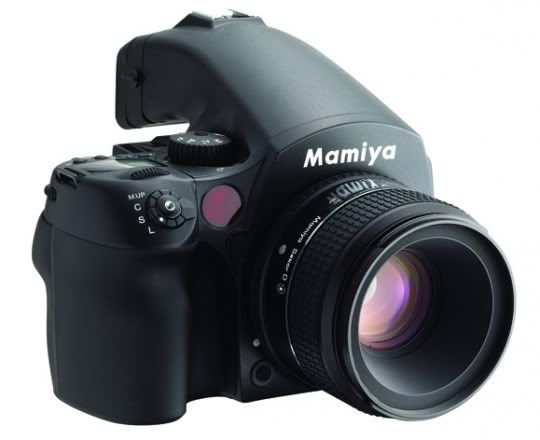
Mamiya has just launched the Mamiya DM40 – basically the world’s fastest large-sensor digital medium-format camera. With a resolution of 40MP and 0.8 seconds per frame (up to 60 frames per minute!), the Mamiya DM40 is perfect for fast medium format digital shooters. For photographers more accustomed to 35mm DSLRs, 40 megapixel seems astounding and 0.8 second per frames sound incredible slow. But coming from the world of medium format cameras, this is blazing fast.
So if you’re a fashion photographer, the Mamiya DM40 is the perfect camera for you then. Make sure you equip your photo studio with the excellent Profoto 8A to ensure that your studio flash can keep up with your camera!
Friday, March 5, 2010
Singapore's richest photo contest!
Labels:
announcement,
contest
0
comments
The photography scene in Singapore has just gotten a lot more interesting, with a new photo competition promising S$30,000 in cash prizes. The Icon de Martell Cordon Bleu photo contest, as its name suggests, is sponsored by Martell - the French purveyor of fine cognac.
Martell said the contest's objective is 'recognising the most outstanding photographer in Singapore who has shown originality of vision presented through thought-provoking ideas, explored new concepts and demonstrated a commitment to their art through the use of the photographic medium'.
With its lucrative prizes, you'd think that the judges will be overwhelmed by entries. There's a catch though - participants must also have participated in exhibitions, with at least one solo exhibition in Singapore. And they must be Singaporean citizens or permanent residents with at least five years of photographic practice.
I'm not sure about you, but I'm definitely disappointed in that participants are required to have at least one solo exhibition in Singapore. In this land-scarce country, photo exhibitions are a rarity, especially so for solo exhibitions. While the aim of such a requirement is noble (in streamlining the quality of entries), it also excludes out a huge portion of talented photographers who never had the chance or resources to host an exhibition, not to mention a solo photo exhibition.
Nonetheless, with my mediocre photographic skills and talent, I shall watch from the sidelines on the development of the richest photo contest. Meanwhile, I will frame some photos on my bedroom wall to organize my very own solo photo exhibition in time for the 2011 Icon de Martell Cordon Bleu. And all you readers are welcome to come over to my bedroom for the opening...
Read the full story here.
Monday, February 22, 2010
Sigma launches the Sigma SD15 DSLR - again
Labels:
announcement,
Foveon,
Sigma
0
comments
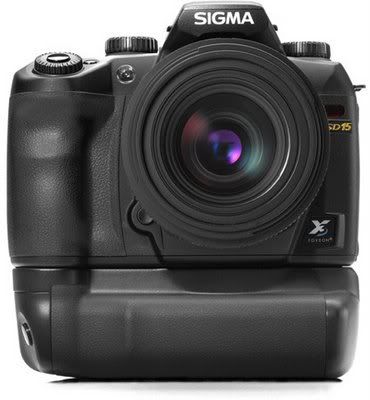
You got to give it to the guys at Sigma for their dogged determination in the face of improbable success. Many moons ago when Sigma first launched their film SLR, I figured it was going to be over pretty soon given the dominance of Canon, Nikon and Minolta. When they launched their first DSLR in the form of the SD9 in 2002, I thought it was pretty interesting with the Foveon sensor. Eight years later with little sales to show for, I’m damn surprised that they’re persisting with this business and launching this new Sigma SD15 DSLR.
It’s been a year ago when Sigma announced the 14-megapixel SD15, and looking at the specs of a 3” (460k) LCD screen and 3-fps rate, it’s difficult to be excited about this new offering. Even the ISO range of 100-1600 seems absolutely archaic in the face of the tremendous strides made by Canon and Nikon. The Foveon X3 sensor might seem promising, but it’s going to take a lot more to deliver a complete package that DSLR customers are looking for today.
Subscribe to:
Posts (Atom)