Saturday, January 22, 2011

How quiet are Leica cameras?

0 comments
Photo credit: K. Praslowicz

Leica cameras have always been proclaimed as some of the quietest cameras around, making them suitable for street photography where stealth is preferred. Leaf shutter 35mm cameras can be quieter, but among focal plane shutter cameras I do love the Leica's cloth shutter with their "snick" sound instead of the metallic "clank" of other cameras.

If you hold a Leica in your hands for the first time without any other cameras for reference, you might wonder what's the fuss about, for the shutter is plainly audible as you click away. Test it against a couple of cameras, and you will realize why people don't hear you with a Leica.

Photographer K. Praslowicz recorded the clicks of several cameras at one location with similar shutter speed, to give you an idea of the relative loudness of each camera. Check out his article here!

http://www.kpraslowicz.com/2007/12/16/the-quiet-camera/

Monday, November 15, 2010

Digital limbo – how low can you go?

2 comments
_MG_8071


The digital revolution brought photography to a whole new level. With the advent of digital imaging, professional photographers are now churning out incredible photos never possible before with film. The race is now on the technological frontier, with professional photographers now having to balance artistic creativity with digital mastery.

But the digital revolution also brought on a very serious threat to the working photographers. Before digital cameras came on the scene, photography was the enclave of photography enthusiasts and working photographers. You need to spend a significant amount of time and effort to learn the concept of exposure and everything else required to get an image properly exposed on film.

Depending on the era you started photography, you’d begin by learning how to load your film and the basics of exposure. You’d learn the Sunny-16 rule, the composition rules and proper focusing techniques (including pre-focusing, zone focusing and hyper-focusing). You’d learn about the reciprocity failure rule when your long exposure mode came out all wrong, about colour correction filters when your images turned out cyan or red, about flash exposure calculation when you see blown out details in your flash photography. There was no Internet, so you got to read up books and talk to seniors who’d tease you to no end about your efforts in photography, before telling you how to resolve the issue.

If all of these doesn’t make any sense to you, it’s alright. You probably got into photography when the film cameras have auto-loading, auto-focusing and auto modes for virtually everything. Flash metering? Don’t cameras calculate everything already? We thought that was the golden age of photography, with the Canon EOS-1V and Nikon F5 ruling the roost. People would think you’re nuts spending US$2000 for a flagship SLR camera.

In the blink of an eye, digital photography landed on our shores with the arrival of affordable DSLRs such as the Nikon D70 and Canon EOS 1000D. Not only can the cameras do everything setting for you (truly “you press the button, we do the rest”), you can also see what you have just shot. That was truly the nail in the coffin for film photography.

But it turned out that film didn’t want to die alone, because it was dragging a whole strata of working photographers with it. Armed with digital SLR cameras, a whole new generation of photography enthusiasts popped up like mushrooms after the rain, perfectly capable of taking photos without much experience. Point and compose – the DSLRs churned out images that were the preserve of knowledgeable photographers. There is no longer a need to struggle to learn the basics of photography before you can churn out images that look great – the camera makes you look like a genius!

Portraits with shallow depth of field? Check.
Macro photography? Check.
Motion freezing sports photography? Check.

It wasn’t long before many of the new photographers got approached by companies who require photography services at a cheap rate. A lot of them didn't start out with the thought of offering commercial services, but somewhere along the way someone wanted a job done, and the photographer thought "why not? I've the gear, and it's a good chance to earn some additional income." They were not sure of the commercial rates (and neither could they command the kind of rates without a good portfolio). So the client got a great rate for the photography service, and the photographer earned some extra dough for his hobby.

It sounds great, but it really isn’t. Not for the freelancer, not for working photographers, and not for the client.

In terms of income, the downward spiraling rates spell disaster bad for full time professionals who have to contend with higher overheads today. Digital bodies usually need to be upgraded every 3 years, software is getting more expensive, and consumers are becoming more demanding (D.I everything!). Unwittingly the freelancers damaged the market for the professionals by charging lower rates just because they could (without having to bear overheads), not because they should.

Professionals now have to contend with a new influx of freelancers fighting for the pie, and they have to work harder for the money to move their skills upwards to avoid the lower end of the market. This is not necessarily a terrible thing, since evolution is a matter of necessity for everyone. Professionals now have to find a new niche for themselves, doing stuff which freelancers can not yet deliver the same quality. Survival of the fittest then…

For the freelancers and low-balling professionals, they'd learn quickly that charging low rates is not worth it. It only takes one nasty/demanding client or a job gone wrong to make them learn the hard way. A re-shoot or additional efforts quickly make charging low-rates a no-brainer – the low fees simply isn’t worth the effort to do all that work. But unfortunately, nobody likes to talk about their mistakes and failures, and so we have new photographers coming into the scene who low-ball the market again, and the cycle continues.

But what about the clients who try to get low-ball rates? They will get what they deserve, and the low-balling clients and photographers deserve each other! The client might find himself into trouble using a cheap photographer, when the latter fails to deliver the goods. He might get away with getting someone else to re-shoot, but if the cost of a re-shoot is very high, or if a re-shoot is not possible (like a wedding), that is problematic for everyone involved. That being the case, the client will quickly learn to use a well-trained professional who will be charging what he’s worth. And if the client doesn't learn his lesson, at least he will be good training fodder for the next low-balling photographer to learn that low-ball rates do not work out.

At the end of the day, nature will find its balance. There will always be low-balling photographers and clients, as well as photographers who are worth their salt and charges accordingly, with the right clients who appreciate their work. If you are a good photographer, charge what you are worth. Because clients who need and value your services will pay for your photos. For clients who low-ball you, forget about them. You won't miss them because they will not be worth your trouble. From my experience, clients who start off by low-balling your rates are usually nasty and demanding clients as well. Focus on sharpening your skills and gaining better clients, instead of going down the long and slippery slope of low-balling.


Friday, November 5, 2010

Create your own origami of Canon cameras

0 comments
A couple of post ago, I highlighted this photographer creating his own film SLR camera from scratch, using nothing more than some raw materials and exceptional engineering prowess. For the rest of us who're mere mortals, it is probably easier for us to construct a camera from PAPER instead of cold hard steel.

That's right. PaperKraft.Net has posted PDFs of origami models of three notable Canon SLR cameras that you can print out using your desktop printer, and put together with nothing more than a pair of scissors, glue and plenty of time and patience!


You can download the artwork for the Canonflex, AE-1 and EOS 5D Mk II online at the following links:

Canonflex Part 1  (download)
Canonflex Part 2 (download)

Canon AE-1 Part 1 (download)
Canon AE-1 Part 2 (download)

Canon EOS 5D Mk II Part 1 (download)
Canon EOS 5D Mk II Part 2 (download)

Tuesday, November 2, 2010

What Your Choice of Camera Says About You

0 comments

Check out what photographer Gordon Lewis has to say about your choice of camera! This article first appeared on Shutterfinger.

 Glad that my personal choice of camera was safe from Gordon's criticism!  :)

Just as the clothes you choose to wear, the food you like to eat, and the people you associate with say something about you, so does the camera system you buy into. The following observations are based on close association with the various groups of camera owners and from having belonged to each group at one time or another. Those who belong to the “lacking any sense of humor” or “offended at the drop of a hat” groups are strongly advised to read no further.

Canon owners
You appreciate the benefits of owning a camera system that leads in cutting-edge digital imaging technology and that offers a wealth of body, lens, and accessory options for every level of photographer, from lowly consumer to top professional. You will switch to Nikon.

Nikon owners
You appreciate the benefits of owning a camera system that leads in cutting-edge digital imaging technology and that offers a wealth of body, lens, and accessory options for every level of photographer, from lowly consumer to top professional. You will switch to Canon.

Sony owners
You believe that Sony’s innovations in consumer electronics and video technology, its leadership in digital imaging chip production, its in-body image stabilization, and its use of Zeiss optics results in a unique design synergy and products of exceptional value—because that’s what it says in the product literature. You also believe in astrology, UFOs and the Easter Bunny.

Pentax owners
You’re the sort of person who would buy a $1500 DSLR body so your stash of thread-mount, K-mount and M-mount lenses from decades ago (collectively worth $75.00 at a flea market or yard sale) won’t go to waste; either that, or you’ve never heard of a Spotmatic, Pentax LX or Takumar, you just think you look cool sporting a day-glo red camera that takes real pictures. You think people are laughing with you, not at you.

Olympus owners
You’re the sort of person who buys North Korean beer, Peruvian underwear, and French cars, not  because you actually like them but because no one else does. When people question your choice of camera system you respond that Olympus images have a certain “soul” and that photographs are what matter, not the camera. You have no friends.

Leica owners
You know that no other camera other than a Hasselblad gains as much instant respect among the cognoscenti as a Leica. Although this relieves the pressure of demonstrating actual photographic prowess, it increases the need to be familiar with the subtle differences in visual signature between an Elmar, Elmarit, Summitar, Summicron, and Summilux. You are either stinking rich, living in your mother’s basement, or one lens purchase away from a divorce.

Friday, October 22, 2010

When technology meets tradition

0 comments
You knew it had to happen. Steve Jobs said the iPhone 4 was akin to the Leica cameras when it came to quality, so it was only a matter of time before someone creates a marriage between the two icons.

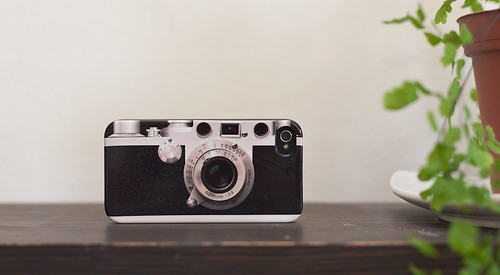
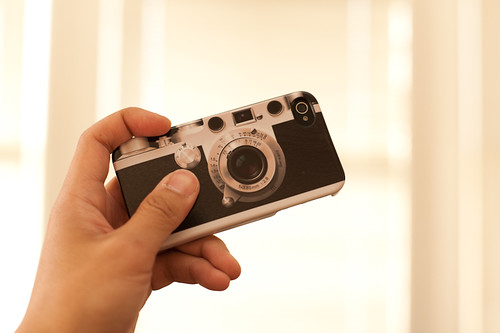
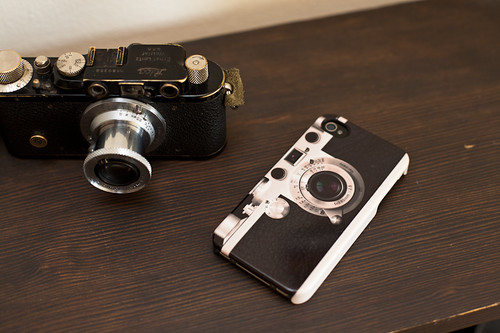
Suguru Nishioka created a case for the iPhone 4 that resembles a Leica IIIf camera, by printing a realistic computer illustration on the case. Now this really takes the coolness quota up to the stratospheric level - I mean, Leica and Apple products are cool by themselves... so the fusion of the two products must be mind-blowing!

iIIIf iPhone 4 case

Say CHEESE!

1932 II looking at iIIIf thinking "WTF??" ;)

All photos by Suguru Nishioka

You can order the iPhone 4 cases from http://www.etsy.com/shop/chasmic, but do note that stocks are selling out really quickly and there's already a back order, so act quickly if you want to step up on your coolness quotient!

Wednesday, October 20, 2010

Building your own SLR camera

0 comments
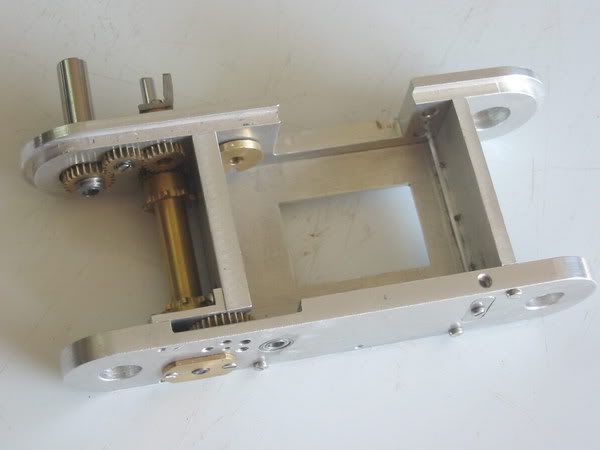
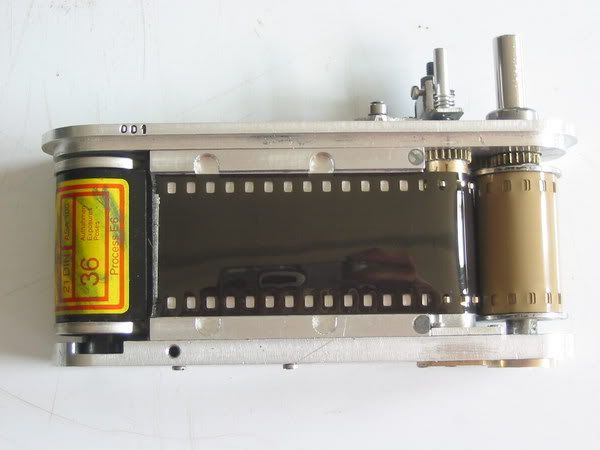
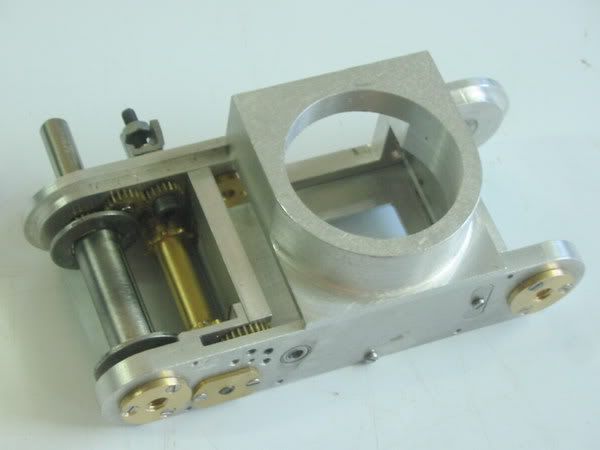
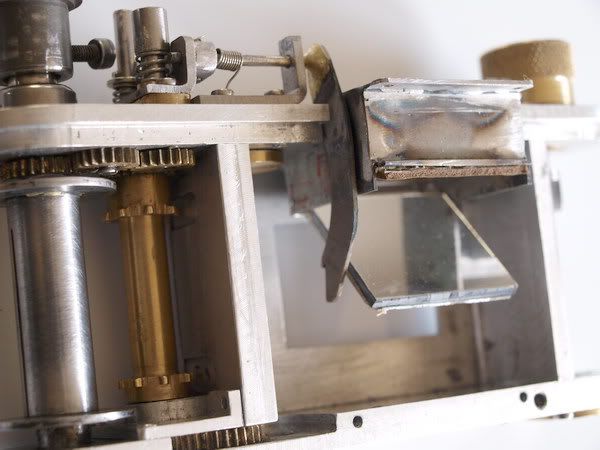
There are some of us who think that photographer per se is not challenging enough, and they would like to have total control of their photography. Apparently, shooting in manual mode and taking handheld meter readings is not considered "total control" for such exacting photographers. Neither is processing and printing their own photos. To proclaim "total control of photography", the idealists feel that one should... hang on to your horses - build your own camera!

Check out this French dude (probably a genius mechanical engineer as much as he's a hardcore photographer) as he gets inspired to create his own SLR camera from scratch. Everything is build from raw materials such as chunks of brass or stainless steel, and machined according to the plans that he drew himself. The only parts that he couldn't manufacture, and thus had to salvage from an existing camera, were the shutter curtain, screws and some ball bearings. Every part of the process was meticulously documented and explained, with interesting photos to illustrate the building process.


All photos copyright of the photographer

The end camera is crude and ugly, but it works 100% and delivers the goods! You can't help but be impressed by the determination of this guy to build a camera from ground up. If he runs a watch company, he would have received the much sought-after title of a "manufacture". Check out his creation process here:


http://www.collection-appareils.fr/phpBB3/viewtopic.php?f=37&t=8822&st=0&sk=t&sd=a  (page 1)

http://www.collection-appareils.fr/phpBB3/viewtopic.php?f=37&t=8822&st=0&sk=t&sd=a&sid=8940afac37e2ea84bd4fd81de0612a0d&start=25   (page 2)

Wednesday, September 15, 2010

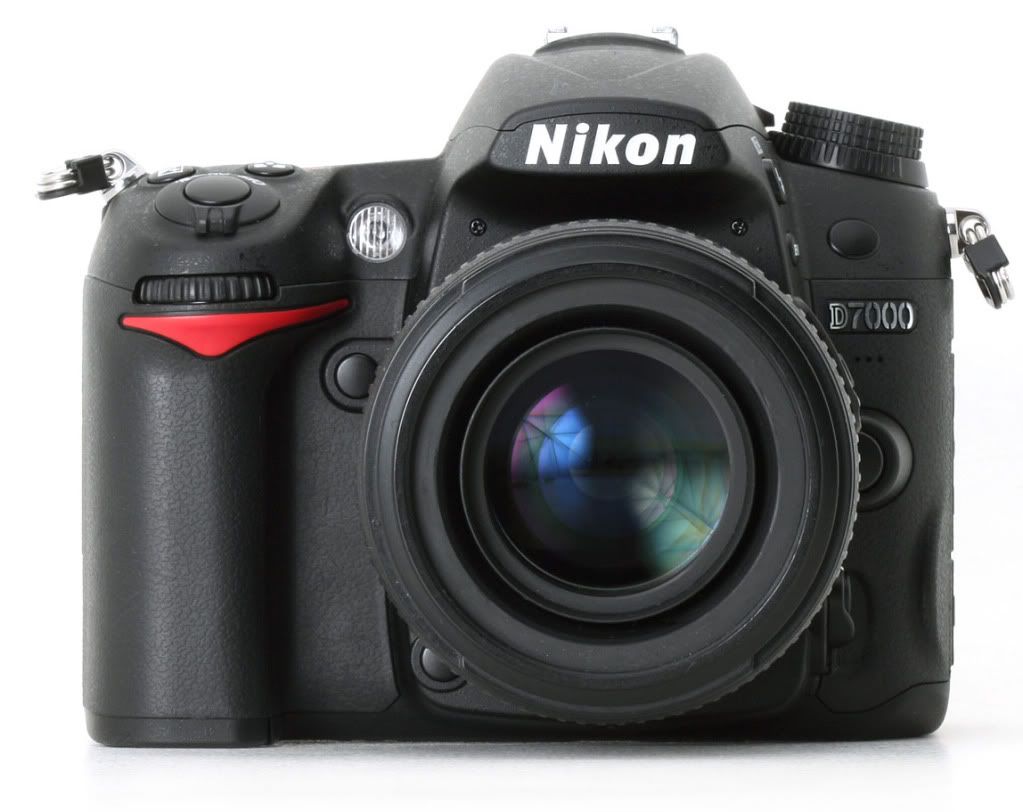
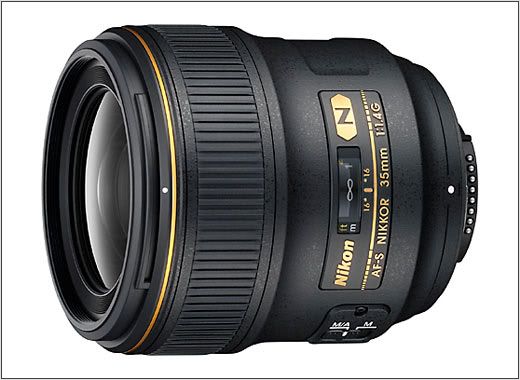
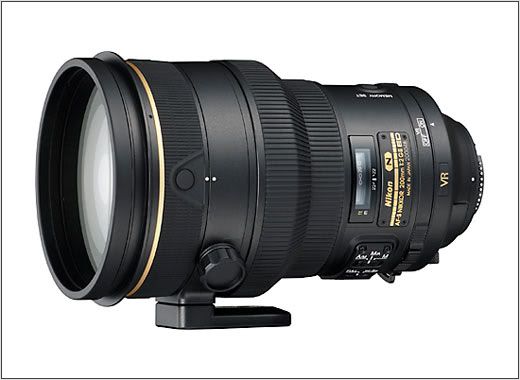
Nikon launches D7000 and two killer lenses!

1 comments
Nikon has (finally) released the successor to the aging D90. The new D7000 slots into the mid-tier ranking of the Nikon DSLR hierarchy, promising performance with a new 16-megapixel CMOS sensor and a faster 'Expeed 2' processor. One of the key highlights is the inclusion of a magnesium alloy body, which until now was only reserved for the higher-end Nikon body. This is interesting because while Canon has been systematically shifting their mid-tier bodies (such as the EOS 60D) downwards in terms of features and specs, we have Nikon actually moving the other way up by including better build for their mid-tier bodies. The Nikon D7000 features a high res 920k 3" LCD and Full HD 1080p 24 frames movie recording capabilities. Looks like the Nikon camp has unleashed a powerful challenger this time round…


Another interesting development comes in the form of the AF-S NIKKOR 35mm f/1.4G. This wide-angle prime lens holds 10 elements in seven groups, including one aspherical glass element, and incorporates Silent Wave Motor (SWM) for quieter auto-focusing, along with Nano-Crystal coating to reduce flare. It will definitely be a welcome addition to the camera bags of street photographers, journalists and portrait photographers looking to capture street photos and environmental portraits in low available light.


And finally, Nikon has also updated its 200mm F2 VR professional lens to Mark II. Although the optical formula remains unchanged, the new AF-S Nikkor 200mm F2G ED VR II utilizes the second generation of Nikon's Vibration Reduction technology (VR II), as well as the company's proprietary nano-crystal coating to reduce ghosting and flare.

Sunday, September 12, 2010

I hate camera straps

0 comments
Let's get this out of the way for once and for all - the traditional camera strap doesn't work most of the time. It is made to be worn around your neck with the camera in front of you, and probably designed by a chiropractor, because that's who you'll be visiting if you use it for long periods of time. Given that a mobile phone can be a weighty pendulum on a lanyard, who actually wants to hang a heavy DSLR around your neck the whole day?

Some people actually sling it over one shoulder, only to see the camera crash to the floor when one is momentarily distracted. I find the traditional camera strap very useful when I wrap it around my hands when shooting, but never for carrying the camera around hands-free.

There are a couple of different variant designs on the camera strap in the past years, and two of the most interesting ones are the Y-Strap and R-Strap. Both straps run diagonally down your body supported by one shoulder, and the camera rests on the opposite hip. The weight is on the shoulder and not on the neck, which makes for comfortable wear for longer periods. The camera slides up smoothly along the strap to your face, guided by the length of the strap.

So if you're not happy with the traditional camera strap and want an alternative option, check out the Y-strap and the R-Strap. I like the fact that you're not advertising a huge DSLR on your chest that screams "I'm a photographer!', which means you can probably get closer to your subject without them noticing. Just watch out when you walk past tables - you definitely don't want your precious lens or camera meeting the corner of some sturdy benches!

The Y-strap

The R-strap